

Kitten Food vs Adult Cat Food: What’s the Difference?
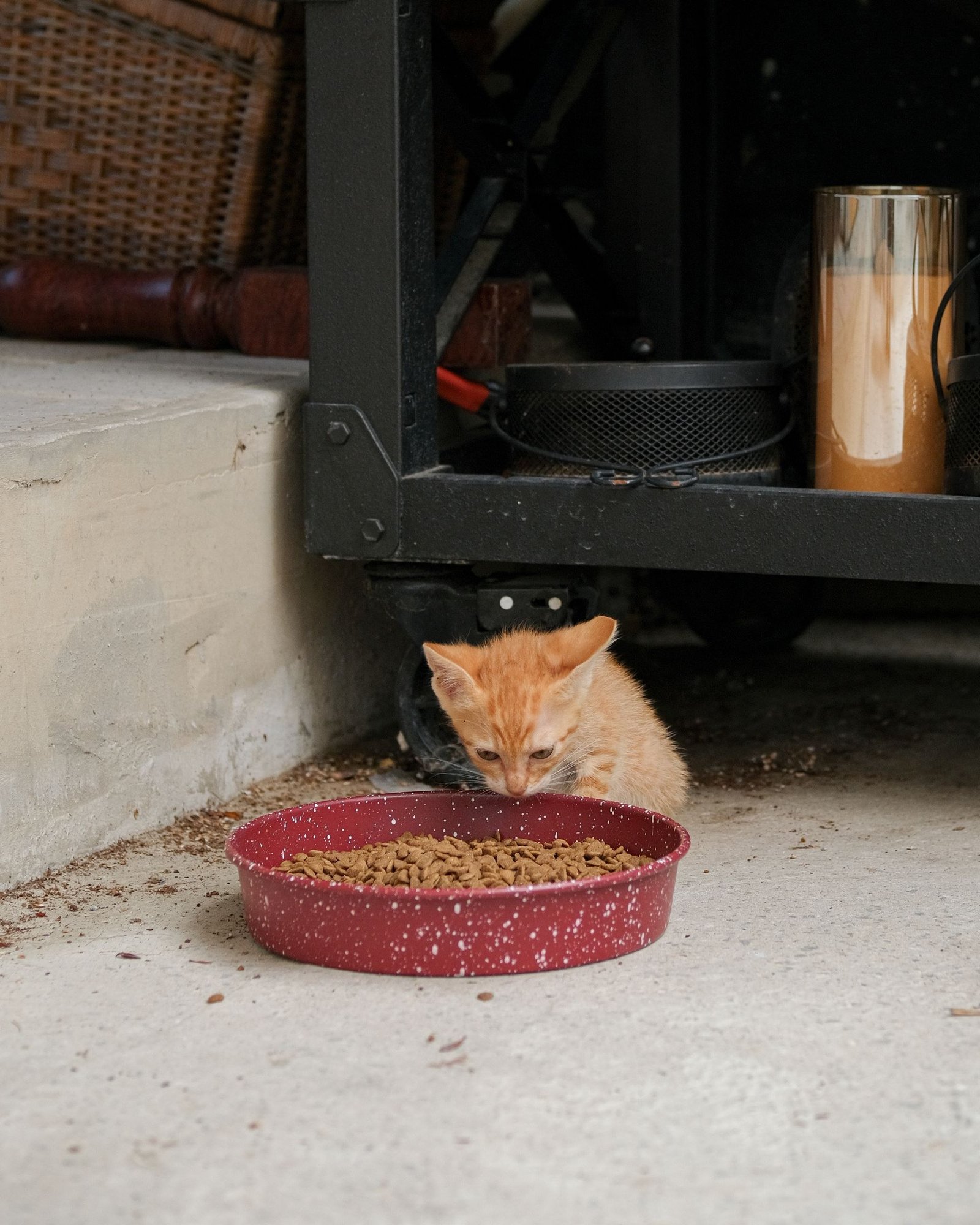
A kitten is not a small cat — nutritionally speaking, it’s a construction project running at full speed. In the first year, a kitten builds its entire adult body: skeleton, muscles, organs, brain, and immune system, all while playing with the manic energy only kittens possess. It will also, in that same year, learn its lifelong food preferences, establish its hydration habits, and set the metabolic patterns that shape its adult weight. The question of kitten food vs adult cat food is really a question about whether the fuel matches the most demanding — and most formative — phase of feline life.
This comparison breaks down exactly how kitten and adult formulas differ, why growing cats need those differences, what happens when the wrong food fills the bowl, whether “all life stages” foods are a legitimate shortcut, and how to time the switch to adult food. By the end, you’ll know precisely what your kitten needs now — and when “now” becomes “then,” down to the week.
🐾 Key Takeaways
- Kitten formulas are nutrient-dense for growth — more protein, more fat, more calories per bite, plus elevated minerals for building bone.
- The AAFCO life-stage distinction applies to cats too — “growth” and “maintenance” profiles set different minimums; check the adequacy statement.
- Adult food can shortchange a growing kitten — the critical gap is energy and mineral density during the months bones are forming.
- Kitten food can overweight an adult — unneeded calories and fat drive gradual weight gain once growth finishes.
- Most kittens switch around 12 months — let growth completion and your vet’s assessment decide, not just the calendar.
- “All life stages” foods are genuinely adequate for kittens — but run richer than adult cats ideally need long-term.
The Core Nutritional Differences
Kittenhood compresses extraordinary construction into a small body with a tiny stomach. Kitten food is engineered for this reality, and the differences from adult food are systematic — closely paralleling the puppy vs. adult dog comparison, with feline-specific twists. (The biggest twist: kittens are obligate carnivores growing at a blistering pace, so the protein and fat elevations run higher than the already-significant canine ones — the entire formula is shifted further toward animal-sourced nutrition.)
Energy density is higher. Kittens burn more calories per pound than adult cats — for growth itself, for their famously intense play, and for maintaining body temperature in a small frame. Kitten formulas pack more kcal per cup (or per can) because a kitten’s stomach simply can’t hold enough adult food to meet growth demands. This is the most immediately practical difference: it means smaller, more frequent meals that actually satisfy, instead of a kitten that’s always hungry because its food can’t keep up with its metabolism.
Protein minimums are higher. AAFCO’s growth profile for cats requires more protein than maintenance — and cats, as obligate carnivores, already start from a higher protein baseline than dogs (a point our cat nutrition guide explores in depth). Every tissue being built is made of protein, and the amino acid requirements (including taurine, critical for feline heart and eye health) reflect a body manufacturing itself at full speed. Plant proteins can’t substitute here — the amino acid profile must be animal-sourced to meet feline requirements.
Fat levels are higher. Fat is concentrated energy plus a carrier for fat-soluble vitamins, and kitten formulas run higher in fat to hit energy needs in small meals. Essential fatty acids — particularly DHA for brain and vision development — get special emphasis in quality kitten foods. The first months are when the nervous system and eyes mature most rapidly, so the fatty acid profile of growth food is doing developmental work that adult food simply isn’t designed for.
Minerals are elevated and balanced. Calcium and phosphorus minimums rise for bone building, with the ratio carefully managed. Kitten skeletons grow fast and can’t be rebuilt later — the mineral architecture of growth food is arguably its most important feature. This is also why “just feed more adult food” fails as a workaround: more volume doesn’t fix the proportions, and a kitten’s stomach can’t hold the volume anyway.
Meal structure differs. Kittens eat three to four small meals daily; adults typically eat two. Our cat portion guide covers the calorie math for both — the frequency difference is part of why kitten routines look so different from adult ones. The schedule isn’t just about stomach capacity, either: frequent small meals keep a kitten’s energy steady through those marathon play sessions, avoiding the hangry crashes that turn kittens into tiny chaos agents.
These aren’t marketing distinctions. Together they define a food purpose-built for the most nutritionally demanding phase of a cat’s life — which is why the life-stage line on the label, explained in our cat food label guide, deserves your attention.
Why Growth Formulas Exist: The Feline Version
Consider what a kitten is doing in its first year. Birth weight multiplies many times over. Bones lengthen and joints form with growth plates open and vulnerable. The brain and visual system mature — the rationale for DHA in kitten formulas. The immune system learns its job. Muscle, organs, skin, and coat expand simultaneously.
An adult maintenance food is formulated for a finished cat in upkeep mode. Fed during construction, it doesn’t just slow progress — it risks structural gaps. The classic concern is a kitten on adult food (or an unbalanced homemade diet) missing the mineral density needed during the months when bones form fastest. Energy shortfall shows as poor growth, dull coat, and low resilience — a kitten running on empty during the one year that can’t be repeated. This is also why reputable breeders and shelters are so insistent about proper kitten nutrition from day one: the growth window opens once, and it doesn’t reopen.
The reverse error is equally real: a finished cat doesn’t need construction-site deliveries. Adult cats fed kitten food long-term receive calories, fat, and minerals beyond their needs — the standard recipe for gradual, quiet weight gain. Given how easily indoor adult cats already gain weight (see our cat portion guide), kitten food as an adult diet is an accelerant nobody needs.
The timeframe matters. A week of the wrong food during a transition is harmless. The risks describe months of mismatch — which is exactly what happens in multi-cat households where the kitten eats the adults’ food (or vice versa) indefinitely. Short-term flexibility; long-term fidelity to life stage.
Feeding Schedules: Kitten Rhythm vs Adult Rhythm
The food differs — and so does the routine. Kittens and adult cats eat on fundamentally different schedules:
Kittens: three to four meals daily. A kitten’s stomach is tiny relative to its enormous energy needs; it physically cannot eat enough in two sittings. Young kittens (under ~6 months) typically need four meals; older kittens do well on three. Each meal is small, calorie-dense, and eagerly consumed. Scheduled kitten meals also build the food-motivated focus that makes training (carrier acceptance, handling, name recognition) so much easier in the first year.
Adults: two meals daily. Once growth completes, two meals — morning and evening — suit most adult cats. Some adults prefer three smaller meals, and that’s fine too; the total matters more than the count. The feline grazing instinct can be accommodated with a measured dry-food portion left out, as our portion guide explains — measured grazing is very different from an endlessly refilled bowl.
The transition happens alongside the food switch around 12 months: consolidate from three-to-four meals to two, redistributing (not reducing beyond the adult calorie target) the day’s food. Merge gradually over a week or two — cats adapt to schedule changes faster than to food changes, but sudden consolidation can still trigger protest meowing at the missing mealtime.
Water, always. Whatever the schedule, fresh water stays available all day for kittens and adults alike. And this is the ideal window to establish wet food in the diet — kittens introduced to varied textures (pâté, chunks, dry) before 6 months typically accept them for life, while cats fed dry-only as kittens often become committed dry-food loyalists. The dry vs. wet guide makes the hydration case; kittenhood is when you lock in the habit.
“All Life Stages” Foods: The Feline Assessment
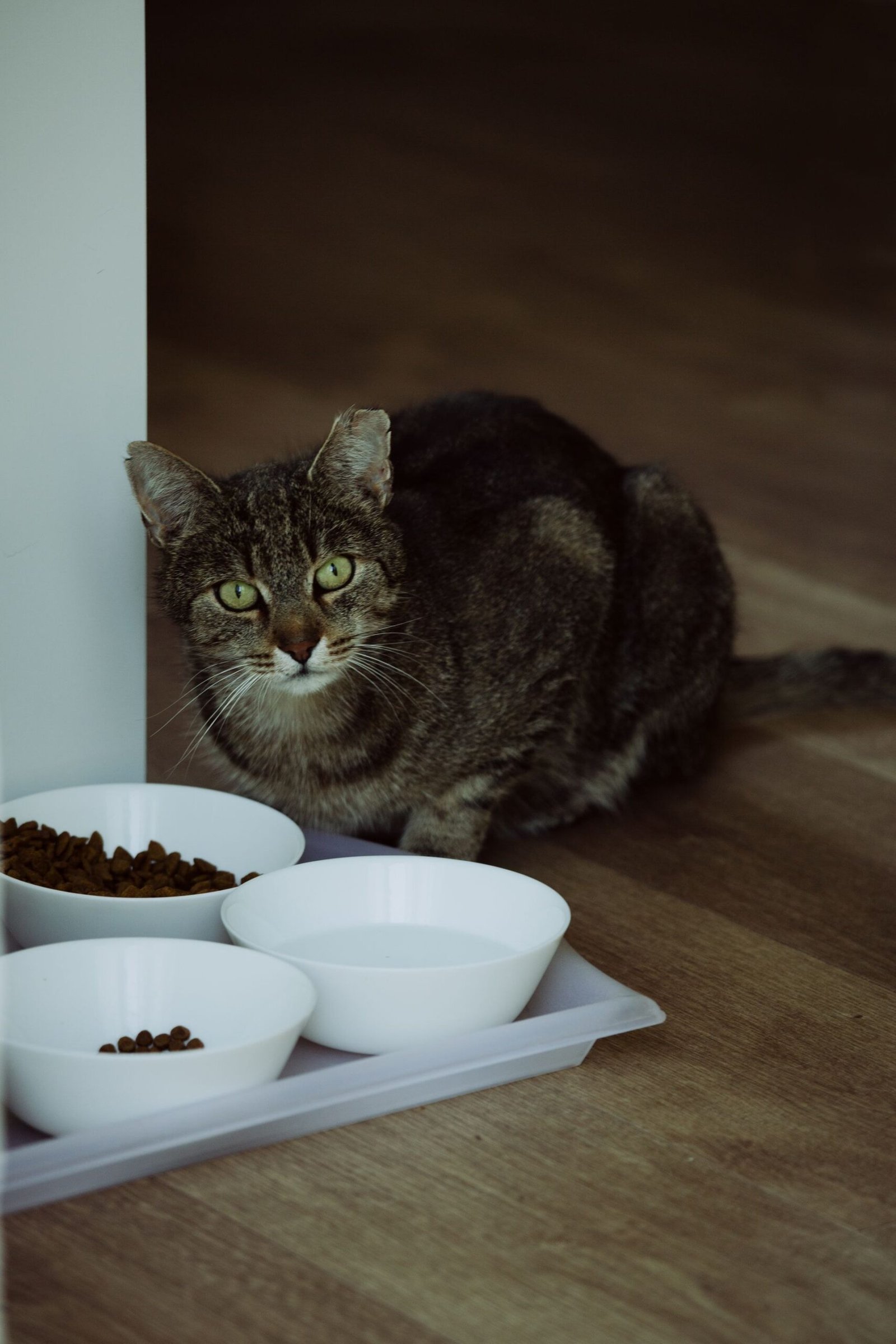
Foods labeled for “all life stages” appear in the cat aisle too, and the logic mirrors the canine version: AAFCO’s growth profile sets the higher minimums, so a food meeting growth requirements automatically exceeds maintenance minimums. An all-life-stages cat food is essentially a growth-capable formula — nutritionally adequate for kittens, and adequate (by exceeding minimums) for adults.
The feline-specific catch is sharper than the canine one, because adult cats are so prone to weight gain. An all-life-stages formula is calorie-dense like kitten food. For an active young adult, that’s manageable with careful portioning. For a neutered indoor adult — the classic easy keeper — it’s a daily calorie surplus waiting to happen. The food is adequate for adults, not optimized for them.
Practical verdict: all-life-stages foods are genuinely useful in multi-cat households with mixed ages (one food, individually portioned) and perfectly fine for kittens. For adults — especially weight-prone ones — a dedicated adult maintenance formula is usually the better daily driver. The label’s adequacy statement tells you which claim a food actually makes. And if you’re running a mixed-age household on one food, the individual portioning matters more than the formula choice — the kitten’s growth portions and the adult’s maintenance portions, measured separately, from the same bag.
The Neutering Transition: A Nutritional Inflection Point
Most kittens are spayed or neutered around 5–6 months — right in the middle of the growth-food phase — and neutering changes the nutritional equation significantly. Neutered cats typically need fewer calories than intact cats of the same size; the post-neuter weight gain is one of the most common (and preventable) feline health trajectories.
The practical challenge: your kitten still needs growth nutrition after neutering, but at a lower calorie level than before. This means:
- Don’t switch to adult food early just because of neutering — growth still needs growth nutrients until ~12 months. Instead, portion the kitten food for the neutered calorie requirement.
- Watch body condition closely in the months after neutering. This is when the quiet weight gain begins — a kitten that was lean at 5 months can be chubby at 9 months on the same portions.
- Adjust in small steps. Reduce portions by ~10% if the waist starts disappearing, reassess in 2–4 weeks. The body condition check in our portion guide shows exactly what to look for.
- Keep activity up. Neutered kittens are still kittens — play remains the best calorie balancer and the best bonding tool. Interactive play sessions do for weight management what no portion tweak can.
Think of neutering as the moment growth feeding gets precise: same growth formula, calibrated portions, vigilant condition checks. Get this right and your cat enters adulthood at a healthy weight — the single best predictor of lifelong weight health.
Making the Switch: Timing and Method
When to switch: most kittens transition to adult food around 12 months of age. Unlike dogs — where size dramatically shifts the timeline (our puppy comparison details the 9-to-18-month range) — cats are more uniform: the vast majority of domestic cats complete growth around their first birthday. Large breeds (Maine Coons and similar) may grow longer, into 15–18 months; your vet can advise for slow-maturing breeds. If you’re unsure, the 12-month wellness visit is the perfect moment to ask — it takes your vet moments to assess whether growth looks complete.
Better indicators than the calendar: growth has clearly slowed or stopped, adult weight is approaching, and body condition is good. Neutering often coincides with the growth-completion window, and neutered cats need fewer calories — so the food switch and the portion adjustment frequently happen together. Discuss timing at a routine vet visit; they can assess growth completion in minutes.
How to switch: gradually, over 7–10 days. Start with ~25% new food mixed into the old, increasing the proportion every few days. Kittens’ digestive systems are adaptable, but abrupt changes commonly cause soft stool or food refusal — the gradual blend avoids both. Cats are also neophobic (suspicious of new foods), so patience matters more than speed; some cats need a full two weeks, and that’s perfectly fine. If digestive upset appears, slow the transition — more days at each ratio — not the decision.
What to switch to: an adult maintenance formula suited to your cat — considering neuter status, activity level (indoor vs. outdoor), and any weight tendencies. This is also the natural moment to reassess everything: portions drop to adult maintenance levels (see our portion guide), meal frequency consolidates from three-to-four down to two, and the dry vs. wet balance you’ve built can continue seamlessly into adulthood.
Shopping checklist for kitten food (for anyone still choosing): confirm the adequacy statement claims “growth” (or “all life stages”); look for a named animal protein first on the ingredient list (remember, kittens are obligate carnivores with high protein needs); check for DHA or fish oil (brain and vision development); note the kcal per cup or can so portions can be measured; and choose textures your kitten will actually eat — the best formula in the world fails if the kitten stages a hunger strike. Price and packaging tell you nothing; the adequacy statement and ingredient list tell you everything.

🩺 A note from the nutrition desk
This comparison is educational. Kittens with growth concerns, digestive issues, or diagnosed conditions need individualized nutrition plans from their veterinarian. Orphaned or hand-raised kittens have special feeding needs (proper milk replacer, not cow’s milk) — consult your vet or a reputable rescue resource. Bring your food’s label to kitten visits; your vet can confirm the life-stage fit in seconds.
Frequently Asked Questions
The questions kitten owners ask most — short answers, same principles as above.
Can kittens eat adult cat food?
For a short stretch (a few days), yes — it won’t harm them. But adult food fed throughout growth risks under-nutrition during the critical construction window: inadequate energy and mineral density while bones are forming. Feed kitten (or all-life-stages) food until growth completes, around 12 months for most cats.
Is kitten food bad for adult cats?
Not dangerous — just unnecessarily rich. The main risk is gradual weight gain from the higher calorie and fat density, which compounds the weight tendencies indoor adults already have. An adult who steals kitten food occasionally is fine; an adult fed kitten food as their diet will likely gain weight over months.
When should I switch from kitten to adult cat food?
Around 12 months for most cats — later (15–18 months) for slow-maturing large breeds. Let growth completion and your vet’s assessment decide rather than the calendar alone, and transition gradually over 7–10 days.
Are “all life stages” cat foods as good as kitten food for kittens?
Nutritionally, a food meeting AAFCO growth requirements is adequate for kittens whether labeled “kitten” or “all life stages” — the growth minimums are what matter. The practical difference is on the adult side: all-life-stages formulas run richer than maintenance foods, so portion adults carefully.
Do kittens need milk?
No — despite the classic imagery, cow’s milk isn’t necessary for kittens (and many cats are lactose-intolerant). Weaned kittens need kitten food and fresh water, not milk. Orphaned neonatal kittens need species-appropriate milk replacer and veterinary guidance — never cow’s milk as a substitute.
My kitten steals the adult cat’s food. Is that a problem?
Occasional bowl-raiding is harmless; a pattern is the problem. In multi-cat homes with mixed ages, feed separately — different rooms, supervised meals, or microchip-activated feeders — so the kitten consistently gets growth food and the adult doesn’t live on kitten calories. The multi-cat strategies in our portion guide apply directly.
Should kittens get treats?
Sparingly — and meat-based. Kittens need their calories from complete growth food; every treat calorie displaces growth nutrition. Tiny treats are fine for training essentials (carrier acceptance, handling, harness introduction), but keep quantities minimal. Our cat treats guide covers the 10% rule — for kittens, treat that ceiling as generous, not a target.
Is wet or dry better for kittens?
Both formats work in kitten formulas, and the dry vs. wet comparison applies fully — but kittenhood is the strategic window for establishing wet food in the diet. Kittens exposed to varied textures early accept them for life; dry-only kittens often become dry-only adults. Even one wet meal daily builds a hydration habit that pays off for 15+ years.
Conclusion: Feed the Growth, Then Feed the Cat
The kitten food vs adult cat food question resolves into the same principle as its canine counterpart: feed the life stage. Growth is construction — demanding, mineral-precise, and time-limited — and kitten formulas are built for it. Adulthood is maintenance — steadier, leaner, long-haul — and adult formulas are built for that. “All life stages” bridges the gap honestly, especially in mixed-age households, but isn’t the optimal long-term adult diet.
A few parting rules for the kitten year: keep growth food until growth genuinely finishes (~12 months); navigate the neutering transition with portion adjustments, not premature food switches; establish wet food and varied textures early; feed separately in multi-cat homes; and enjoy the absurd, wonderful energy of it all — the kitten phase passes faster than you’d believe, and the nutritional foundation you build now serves for fifteen years or more.
Get the match right and everything downstream works as designed: portions from our feeding guide land correctly, the nutrition fundamentals apply cleanly, and your vet’s growth assessments rest on a solid nutritional foundation. For more head-to-head help, browse our comparisons collection — and congratulations on the kitten; the chaotic, wonderful first year is the best foundation you’ll ever build.