

Feeding Schedules for Dogs: How Often and When
Most dog owners obsess over what goes in the bowl and give little thought to when — but the dog feeding schedule shapes digestion, behavior, housetraining, weight management, and even your bond. A thoughtful schedule turns feeding from a chore into a rhythm; a chaotic one turns it into a source of begging, accidents, and mystery weight gain. And unlike choosing a food brand, building a schedule costs nothing — it’s pure routine, and it pays off every single day.
This guide covers the complete scheduling picture: why regular mealtimes matter, how many meals dogs need at each life stage, optimal timing, scheduled feeding vs. free-feeding, special situations (athletes, seniors, medical needs, multi-dog homes), and how to transition schedules smoothly. By the end, you’ll have a feeding rhythm tailored to your dog and your life — with the reasoning behind every part of it, ready to adapt as your dog ages.
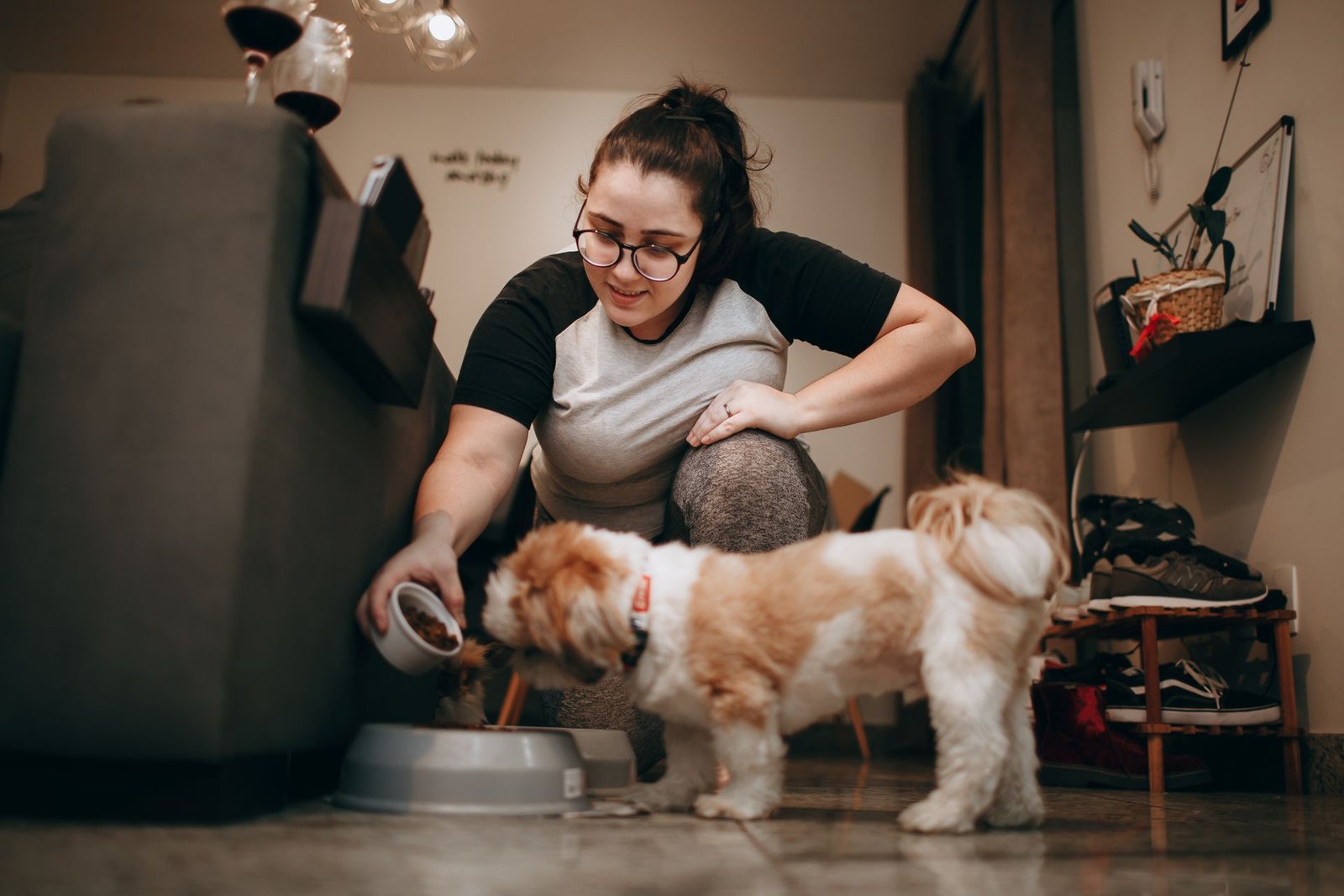
🐾 Key Takeaways
- Most adult dogs thrive on two meals daily — morning and evening, roughly 12 hours apart, at consistent times.
- Puppies need three to four meals — small stomachs can’t hold a day’s nutrition in fewer sittings; consolidate to two around 12 months.
- Consistency beats perfection — regular timing regulates digestion, housetraining, and behavior more than the exact clock time.
- Scheduled meals beat free-feeding for most dogs — you can measure intake, monitor appetite, and manage multi-dog fairness.
- The total matters more than the timing — schedule distributes the day’s calories (from our portion guide); it doesn’t change them.
- Adjust for life stage and lifestyle — seniors, athletes, and dogs with medical needs may need modified schedules; your vet can advise.
Why Mealtimes Matter More Than You Think
Dogs are creatures of rhythm. In the wild, canids eat in patterns — hunts, meals, rest — and domestic dogs retain deep physiological and behavioral responses to predictability around food. A consistent schedule delivers benefits that go well beyond convenience:
Digestive regularity. Dogs fed at consistent times develop predictable digestive rhythms — which means predictable elimination timing. This is the housetraining superpower every new puppy owner discovers: scheduled meals produce scheduled potty breaks, and scheduled potty breaks produce a housetrained dog. Random feeding produces random digestion, and random digestion produces accidents.
Appetite monitoring. A dog who eats eagerly at 7 AM and 6 PM gives you two daily health check-ins for free. Appetite changes are among the earliest signs of illness — dental pain, nausea, infections, and many other conditions announce themselves first as a skipped or picky meal. Free-fed dogs offer no such signal; you can’t notice what was never scheduled.
Behavioral calm. Dogs with predictable mealtimes beg less, counter-surf less, and obsess less about food — the anxiety of when is removed. Counterintuitively, scheduled feeding reduces food obsession while free-feeding (constant availability) can increase grazing anxiety in some dogs. Structure relaxes them.
Weight management. Scheduled, measured meals make calorie control possible. Free-feeding makes it guesswork — especially in multi-person or multi-dog households where “someone must have fed him” is the leading cause of double dinners.
Bonding and training. Mealtimes are interaction rituals. Dogs fed by hand or through training exercises at scheduled times associate their person with good things — the schedule becomes a twice-daily reinforcement of the relationship. Even simply asking for a sit before placing the bowl turns every meal into a micro-training session. Over a dog’s lifetime, that’s thousands of tiny trust deposits — the compound interest of companionship.
How Many Meals: The Life-Stage Answer
The core scheduling question — how many meals per day — is answered primarily by life stage:
Puppies (under ~6 months): 3–4 meals daily. Growing puppies have enormous energy needs and small stomachs; they physically cannot consume a day’s nutrition in two sittings. Young puppies typically eat three to four evenly spaced meals. Our puppy vs. adult comparison covers the nutritional side of this rhythm — the schedule and the formula evolve together.
Older puppies (6–12 months): 3 meals, transitioning to 2. As growth slows and stomach capacity increases, consolidate from three meals to two — usually by merging the midday meal into breakfast and dinner over a week or two. Most dogs complete this transition around 12 months, alongside the switch to adult food.
Adults: 2 meals daily. This is the standard for good reasons: it steadies energy across the day, gives two appetite check-ins, keeps any single meal from being enormous (relevant for bloat-prone deep-chested breeds), and fits human schedules naturally. Some healthy adults do fine on one meal daily, but two is the more common veterinary recommendation — and it provides better monitoring.
Seniors: 2 meals, sometimes 3 smaller ones. Aging dogs often do well on the adult pattern, but seniors with reduced appetite, dental issues, or digestive sensitivity may eat better with three smaller meals — less food per sitting is easier to face and digest. Let the senior’s appetite and condition guide you; the schedule should serve the dog, not tradition.
The through-line: meals decrease as stomachs grow and metabolisms settle. There’s no prize for keeping a puppy on four meals into adulthood, and no virtue in rushing an adult to one meal for your convenience. Match the frequency to the physiology.

Timing: When Should the Meals Land?
With frequency decided, the next question is timing — and here the news is reassuring: the exact clock time matters far less than consistency. Dogs don’t need 7:00 AM sharp; they need predictable. That said, some timing principles help:
Space meals roughly evenly. For two-meal dogs, ~12 hours apart is the natural template (7 AM / 7 PM, 8 AM / 6 PM — whatever fits your life). Avoid extreme gaps: 16+ hours between meals leaves a dog genuinely hungry and can encourage gorge-eating at the next meal.
Feed after exercise, not before. Vigorous exercise on a full stomach increases bloat (gastric dilatation-volvulus) risk, particularly in large, deep-chested breeds. The safe pattern: exercise first, then wait 30–60 minutes before feeding — or feed first and wait 1–2 hours before vigorous activity. A calm post-walk meal is the classic healthy rhythm.
Evening meal timing and housetraining. For puppies and newly housetrained dogs, serving the last meal a few hours before bedtime (with a final potty break after) reduces overnight accidents. Adult dogs with reliable housetraining are flexible — but the “dinner, then last outing” sequence remains good practice.
Medication and special timing. Dogs on medications with food requirements (or foods that must be given with meals) need their schedule built around dosing times — coordinate with your vet. Diabetic dogs in particular need precise meal timing aligned with insulin — this is medical scheduling, non-negotiable and vet-directed.
Your schedule matters too. The best feeding times are the ones you’ll actually keep. A theoretically perfect 6 AM / 6 PM schedule you sleep through half the week is worse than a consistent 8 AM / 8 PM you never miss. Build the dog’s schedule inside your real life, then protect it — and when life disrupts it temporarily, return to the rhythm without guilt the next day.
Scheduled Feeding vs. Free-Feeding
The structured alternative to scheduled meals is free-feeding — leaving dry food available all day. Let’s compare honestly:
Free-feeding advantages: convenience (fill the bowl, done), suits natural grazing in the minority of dogs who self-regulate well, and works for nursing mothers or underweight dogs needing maximum intake opportunity.
Free-feeding disadvantages: intake becomes unmeasurable (fatal for weight management), appetite changes go unnoticed (losing the early-illness signal), it’s unworkable in multi-dog homes (who ate what?), it invites pests and stale food, and most dogs don’t self-regulate — they overeat. It’s also incompatible with most medical diets and weight-loss plans.
The verdict for most dogs: scheduled, measured meals win decisively. The monitoring, portion control, and behavioral benefits compound daily, while free-feeding’s convenience is a thin trade for what’s lost. The exceptions (self-regulating grazers, nursing mothers, specific vet-directed cases) prove the rule — and even then, measured free-feeding (a set daily amount left out, not an endlessly refilled bowl) preserves some control.
A middle path: scheduled wet-food meals plus a measured dry-food portion available for grazing — the structure of scheduled feeding with some of free-feeding’s flexibility. This hybrid works well for households where midday schedules are unpredictable.
Special Situations
Canine athletes and working dogs (agility, hunting, sled, herding, service work) have elevated energy needs and specific timing demands: feed well before and well after intense work, never immediately around it. Some performance dogs do better on three meals to distribute high calorie loads. If your dog works hard, discuss fueling strategy with your vet — athletic nutrition is its own discipline.
Seniors may need schedule adjustments beyond meal count: softer foods or soaked kibble for dental issues, earlier evening meals for dogs with nighttime restlessness, and patience for slower eating. Cognitive decline can disrupt learned routines — keep the schedule extra consistent and consider puzzle feeders for mental engagement at mealtimes.
Multi-dog households need schedule management: feed separately (different rooms or crates) so each dog’s intake is measurable and food theft doesn’t redistribute calories. Supervise meals, pick up bowls after 20–30 minutes, and feed in the same order each time — routine reduces resource-guarding tension. The schedule is a peace treaty as well as a nutrition plan.
Medical schedules override everything: diabetes (meals timed to insulin), kidney disease (often smaller, more frequent meals), post-surgical recovery (vet-directed refeeding schedules), and food-allergy trials (strict timing for elimination diets). When health dictates the schedule, the vet’s protocol is the schedule — this guide’s general advice yields to it.
The Pre- and Post-Meal Ritual
The minutes around the meal are training gold — a twice-daily opportunity most owners waste. A simple ritual, repeated every time, builds manners, impulse control, and calm:
Before the bowl goes down: ask for a sit (or down) and a brief wait. Start with one second of patience, build to ten. The dog learns that calm behavior causes meals — one of the most powerful lessons in domestic life. For excitable dogs, this single ritual, practiced twice daily, often generalizes into better impulse control elsewhere.
During the meal: let the dog eat in peace. Don’t pet, don’t hover, don’t take the bowl away to “prove” you can (an outdated dominance-theory practice that teaches food anxiety, not respect). Multi-dog homes: separate spaces, no competition. Peaceful meals build food security; food security prevents guarding.
After the meal: a calm potty break within 15–30 minutes (digestion is prompt, especially in puppies), then quiet time — no wild play immediately after eating, particularly for deep-chested breeds. Fresh water available, bowl picked up after 20–30 minutes whether finished or not (the deadline teaches focused eating and keeps intake measurable).
Two minutes of ritual, twice a day, compounding for years. The dogs with the best mealtime manners aren’t the “well-behaved breeds” — they’re the ones whose owners built the ritual.
Transitioning Schedules Smoothly
Dogs adapt to schedule changes well — provided the changes are gradual and the new pattern is consistent. Common transitions:
Puppy 4→3→2 meals: merge meals over 1–2 weeks each step. When dropping from three to two, redistribute the midday meal’s calories across breakfast and dinner (the total stays the same — only the distribution changes). Expect a few days of midday hopeful hovering; it passes.
Newly adopted dogs: start with the shelter or foster home’s schedule if known, then shift gradually to yours over a week. Everything is new for a rescue dog — keeping mealtimes familiar is one stability anchor among many changes. Our general principle: change one variable at a time.
Owner schedule changes (new job, daylight saving, travel): shift mealtimes by 15–30 minutes per day toward the new target rather than jumping an hour at once. Dogs notice abrupt changes and may respond with pre-dawn wake-up concerts. Gradual shifts go unremarked.
Free-feeding to scheduled: the most impactful transition. Start by measuring the current daily intake (weigh what’s left after 24 hours of the current habit — you may be surprised), then divide into two or three scheduled meals at set times, picking up uneaten food after 20–30 minutes. Most dogs adapt within days; the holdouts are usually trained beggars rather than genuinely hungry — stay the course, and keep the total calories appropriate per our portion guide.
Sample Schedules
Templates to adapt — remember, consistency matters more than exact times:
Adult dog, working owner:
– 7:00 AM — Morning walk, then breakfast (half daily ration) + fresh water
– 12:30 PM — Optional: puzzle feeder with small portion of kibble (if alone all day, or skip)
– 6:30 PM — Evening walk, then dinner (half daily ration)
– 10:00 PM — Final potty break
Puppy (4 months):
– 7:00 AM — Breakfast + potty
– 12:00 PM — Lunch + potty
– 5:30 PM — Dinner + potty
– 9:30 PM — Final potty break (no late meal — protects overnight housetraining)
Senior dog, home all day:
– 8:00 AM — Breakfast (softer food if needed) + gentle walk
– 1:00 PM — Small midday meal or enrichment snack
– 6:00 PM — Dinner
– 9:30 PM — Final outing
Multi-dog household:
– Same times for all dogs, fed in separate rooms/crates in consistent order
– Bowls down 20–30 minutes, then picked up regardless
– Treats and chews also distributed separately to prevent guarding
Adapt freely — these are starting rhythms, not prescriptions. The dog in front of you and the life you actually live write the final version.
🩺 A note from the nutrition desk
This guide covers scheduling for healthy dogs. Dogs with diabetes, kidney disease, gastrointestinal disorders, or other medical conditions need veterinary-directed feeding schedules — meal timing can be medically significant. Deep-chested, bloat-prone breeds should discuss feeding practices (meal size, timing around exercise, elevated bowls) with their vet. Puppies with poor growth, seniors losing weight, or any dog with appetite changes should see a vet promptly.
Frequently Asked Questions
Quick answers to the scheduling questions dog owners ask most — the short version of everything above.
How many times a day should I feed my dog?
Twice daily for most adults (morning and evening); three to four times for puppies under 6 months, consolidating to two around 12 months; seniors often stay at two, sometimes three smaller meals. The total daily calories (per our portion guide) matter more than the meal count.
What time should I feed my dog?
Whenever fits your life consistently — roughly 12 hours apart for two-meal dogs. Feed after exercise rather than before (bloat safety), and give puppies their last meal a few hours before bedtime for housetraining. Consistency beats the exact clock time.
Is it okay to feed my dog once a day?
Some healthy adults do fine on one meal, but two is the more common veterinary recommendation — better energy distribution, two appetite check-ins, and smaller individual meals (safer for bloat-prone breeds). If you feed once daily, ensure the single meal isn’t enormous, keep timing consistent, and watch body condition closely.
Should I leave food out all day for my dog?
Scheduled, measured meals are better for most dogs — measurable intake, appetite monitoring, weight control, and multi-dog fairness. Free-feeding suits only the minority of genuine self-regulators (plus nursing mothers and vet-directed exceptions). A hybrid — scheduled meals plus a measured grazing portion — captures some of both.
My dog begs between meals. Am I feeding enough?
Maybe — or maybe not. First verify total calories against our portion guide and body condition (a truly underfed dog looks it). If nutrition is adequate, the begging is behavioral: don’t reward it with food (that trains more begging), try puzzle feeders for the foraging payoff, ensure enough exercise and mental stimulation, and keep treat rituals scheduled rather than on-demand.
How do I change my dog’s feeding schedule?
Gradually: shift times by 15–30 minutes daily toward the new target, redistribute (don’t change) total calories when merging meals, and give it a week. For free-feeding-to-scheduled transitions, measure current intake first, then divide into set mealtimes with 20–30 minute bowl windows. Consistency after the change matters more than speed during it.
Should puppies and adult dogs in the same house eat on the same schedule?
Not necessarily — feed each dog on the schedule their life stage needs (the puppy’s 3–4 meals, the adult’s 2), in separate spaces. The puppy’s extra meals happen while the adult waits elsewhere or rests. Trying to force one schedule on both usually means the puppy is under-fed per meal or the adult is over-fed. Separate schedules, separate spaces, same household harmony.
My work hours are irregular. How do I keep a consistent schedule?
Anchor one meal to your most consistent daily event (waking up, coming home) and let the second float within a 2–3 hour window — dogs tolerate moderate flexibility far better than chaos. Automatic feeders with timers can hold the schedule on unpredictable days; they’re reliable, portion-precise, and remove the guilt. The goal is a rhythm, not a prison timetable.
Conclusion: Rhythm Is Nutrition Too
The dog feeding schedule doesn’t change what your dog eats — it changes everything around it: digestive predictability, housetraining success, appetite monitoring, weight control, behavioral calm, and the twice-daily ritual that anchors your relationship. Two consistent meals, timed to your real life, with the day’s measured calories distributed between them — that’s the whole system, and it works for the vast majority of dogs, from bouncing puppies to grey-muzzled seniors.
Start tonight: pick your two times, measure tomorrow’s food into those two meals, add the two-minute pre-meal ritual, and run the rhythm for two weeks. Watch the digestion settle, the begging fade, and the mealtimes become the calmest part of the day. Then explore the companion pieces — how much to feed, nutrition basics, and our feeding guides collection — to complete the picture.