

How Much Should I Feed My Dog? Portion Sizes Explained
“How much should I feed my dog?” might be the most-asked question in canine nutrition — and one of the most consequential. Get portions right and everything else gets easier: healthy weight, steady energy, good digestion, and a food budget that actually makes sense. Get them wrong, and even the best food in the world can’t do its job. The good news? Figuring out how much to feed a dog is a skill, not a mystery, and this guide will walk you through it step by step.
We’ll start with the feeding guide on the bag (and why it’s only a starting point), then move to the calorie math that personalizes portions to your dog, the hands-on body condition check that tells you whether your portions are working, and the real-world adjustments for puppies, seniors, active dogs, and couch potatoes. No guesswork, no guilt — just a practical system you can use at every meal.
🐾 Key Takeaways
- Start with the feeding guide on the bag, then adjust — it’s calibrated for an “average” dog, and yours may not be average.
- Calories are the real currency: foods range from under 300 to over 500 kcal per cup, so the same “scoop” can mean very different meals.
- Learn the body condition check (ribs, waist, tuck) — it’s more reliable than the scale alone for judging whether portions are right.
- Treats count: keep them to around 10% or less of daily calories, and measure them like you measure meals.
- Adjust by life stage and lifestyle — puppies, seniors, athletes, and lap dogs all need different portions from the same chart.
- Weigh food with a scale or proper measuring cup, reassess monthly, and involve your veterinarian — especially for weight-loss plans or dogs with health conditions.
Why Portions Matter More Than the Food Itself
Here’s an uncomfortable truth: the majority of feeding problems vets see aren’t about which food — they’re about how much. Studies of pet populations in Tier-1 countries consistently find that a large share of dogs carry excess weight, and the primary driver is simple: too many calories in, too few out. An extra quarter-cup a day doesn’t look like much in the bowl, but over a year it’s the caloric equivalent of a human eating an extra meal every single day. Dogs are small; small surpluses compound fast.
The tricky part is that “how much” is genuinely confusing. Bags show ranges (“feed 2 to 3 cups daily for dogs 30–50 lbs”), cups aren’t standardized across households, foods vary wildly in calorie density, and dogs themselves vary in metabolism. Two 40-pound dogs can need meaningfully different calories if one is a field-bred springer who runs five miles daily and the other is a basset hound whose greatest athletic achievement is relocating from couch to rug. The feeding chart can’t know which dog is yours — but you can learn to read your dog and adjust.
There’s also a quieter reason portions matter: consistency. Dogs thrive on routine, and their digestion does too. Random portion sizes — a heaping scoop today, a skimpy one tomorrow, table scraps on weekends — make it impossible to know what’s working. A measured, consistent portion is the baseline that makes every other nutrition decision (switching foods, adding toppers, judging a new treat) interpretable. If you’re new to reading pet food packaging generally, our guide on how to read dog food labels pairs well with this one — especially the section on finding calorie content.
Start With the Bag: How to Use Feeding Guides Properly
Every complete dog food carries a feeding guide — usually a table matching weight ranges to daily amounts. Use it as your starting point, not your final answer. Here’s how to read it well:
Feed to the weight your dog should be, not the weight they are. This is the single most misread line on the bag. If your 50-pound dog should weigh 42, feed the 42-pound row. Feeding guides assume a healthy weight; feeding an overweight dog for their current weight just maintains the excess.
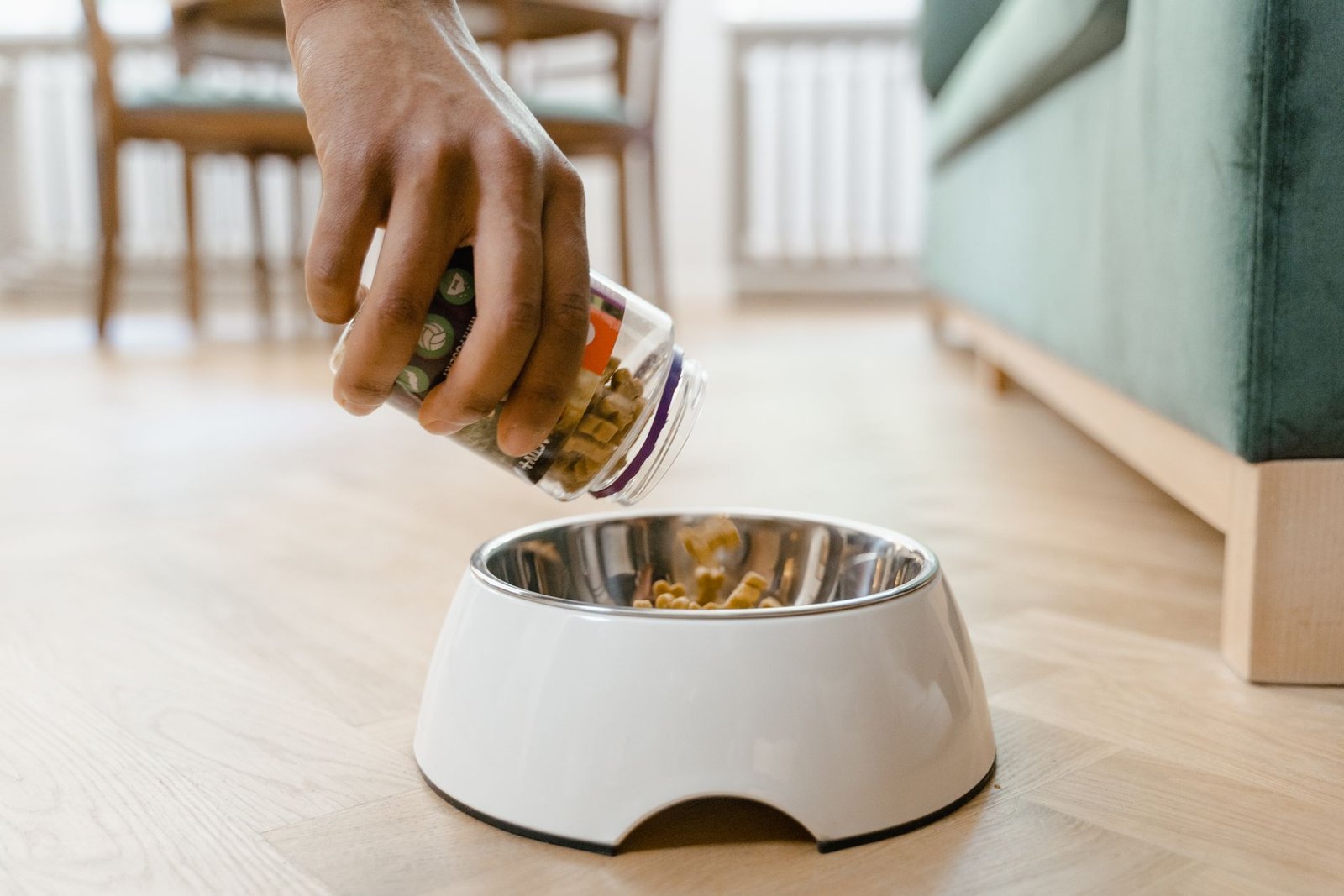
Read the fine print on “cups.” A “cup” on a feeding guide means a standard 8-ounce measuring cup, leveled — not a coffee mug, not a heaping scoop. Better yet, check whether the bag lists grams; weighing food on a cheap kitchen scale is the most accurate method and removes all ambiguity. If you’ve ever wondered why your “two cups” looks different from your neighbor’s, this is why.
Note the calorie content (kcal/cup). This is the number that lets you compare across foods. If your current food is 340 kcal/cup and you’re considering one at 450 kcal/cup, you’ll feed noticeably less volume of the new food — the feeding guide will reflect this, but understanding why prevents the common mistake of feeding the same volume after switching to a richer food.
Treat the guide’s ranges as what they are: ranges. “2–2½ cups” for a weight bracket acknowledges individual variation. Start in the middle, then let your dog’s body condition (next section) tell you which direction to move. And remember the guide shows the total daily amount — split it across meals rather than feeding it all at once (more on schedules in our feeding guides collection).
The Calorie Math: Personalizing Portions to Your Dog
For owners who like precision, there’s a well-established way to estimate your dog’s daily calorie needs. Veterinary nutritionists use Resting Energy Requirement (RER) — the calories a dog burns at rest — then multiply by factors for life stage and activity. You don’t need to be exact; you need a personalized starting point better than “average dog.”
The standard RER formula is: RER = 70 × (body weight in kg)^0.75. (In pounds: divide weight by 2.2 first.) For a 20 kg (44 lb) dog: 70 × 20^0.75 ≈ 70 × 9.46 ≈ 662 kcal at rest. Then multiply by a life-stage factor:
- Neutered adult, typical activity: × 1.6 → ~1,060 kcal/day
- Intact adult: × 1.8
- Weight loss (vet-supervised): × 1.0–1.2 of ideal-weight RER
- Puppy under 4 months: × 3.0; 4 months to adult: × 2.0
- Active/working dog: × 2.0–5.0 depending on workload
- Senior, less active: × 1.2–1.4
Compare the result to what the bag’s guide suggests for your dog’s ideal weight — they should be in the same neighborhood. If they wildly disagree, the calorie math is usually the more personalized figure, and it’s worth discussing with your vet. Then convert calories to food: divide daily kcal by the food’s kcal/cup to get cups per day. A 1,060 kcal need on a 350 kcal/cup food = about 3 cups daily, split across meals.
Don’t let the math intimidate you — do it once, write the number on the bag with a marker, and you’re set until something changes (new food, new weight, new activity level). Revisit the calculation any time your dog’s life changes meaningfully.
The Body Condition Check: Your Dog Is the Final Judge
Charts and formulas get you close; your dog’s body tells you the truth. Veterinarians assess this with body condition scoring (BCS) — typically a 9-point scale where 4–5 is ideal. You can do a simplified version at home in thirty seconds, monthly:
- Rib check: Run your hands along your dog’s ribs with light pressure. You should feel ribs easily under a thin layer of fat, like the back of your hand — not see them prominently (too thin), and not have to press hard to find them (too heavy).
- Waist check: Look down at your dog from above. You should see a visible waist — an inward curve behind the ribs. A straight tube from shoulders to hips suggests excess weight.
- Tuck check: Look from the side. The belly should tuck upward behind the ribs, not hang level or sag.
If all three look right and your dog’s weight is stable, your portions are correct — regardless of what any chart says. If ribs are hard to find and the waist is gone, reduce by about 10–15% and recheck in 2–4 weeks. If ribs are prominent with no fat cover, increase similarly. Slow adjustments beat dramatic ones; dogs’ metabolisms respond better to gentle changes, and you’ll avoid the digestive upset that sudden shifts can cause.
Weigh your dog monthly if you can (many vet clinics allow free walk-in weigh-ins). Trends matter more than single readings — a pound gained over three months on a small dog is significant, while day-to-day fluctuations are just noise from meals, water, and bathroom timing.
Measuring Tools: Cups, Scales, and the Scoop Problem
You can’t manage what you don’t measure, and most owners measure badly — not from carelessness, but because the tools mislead. Let’s fix the toolbox:
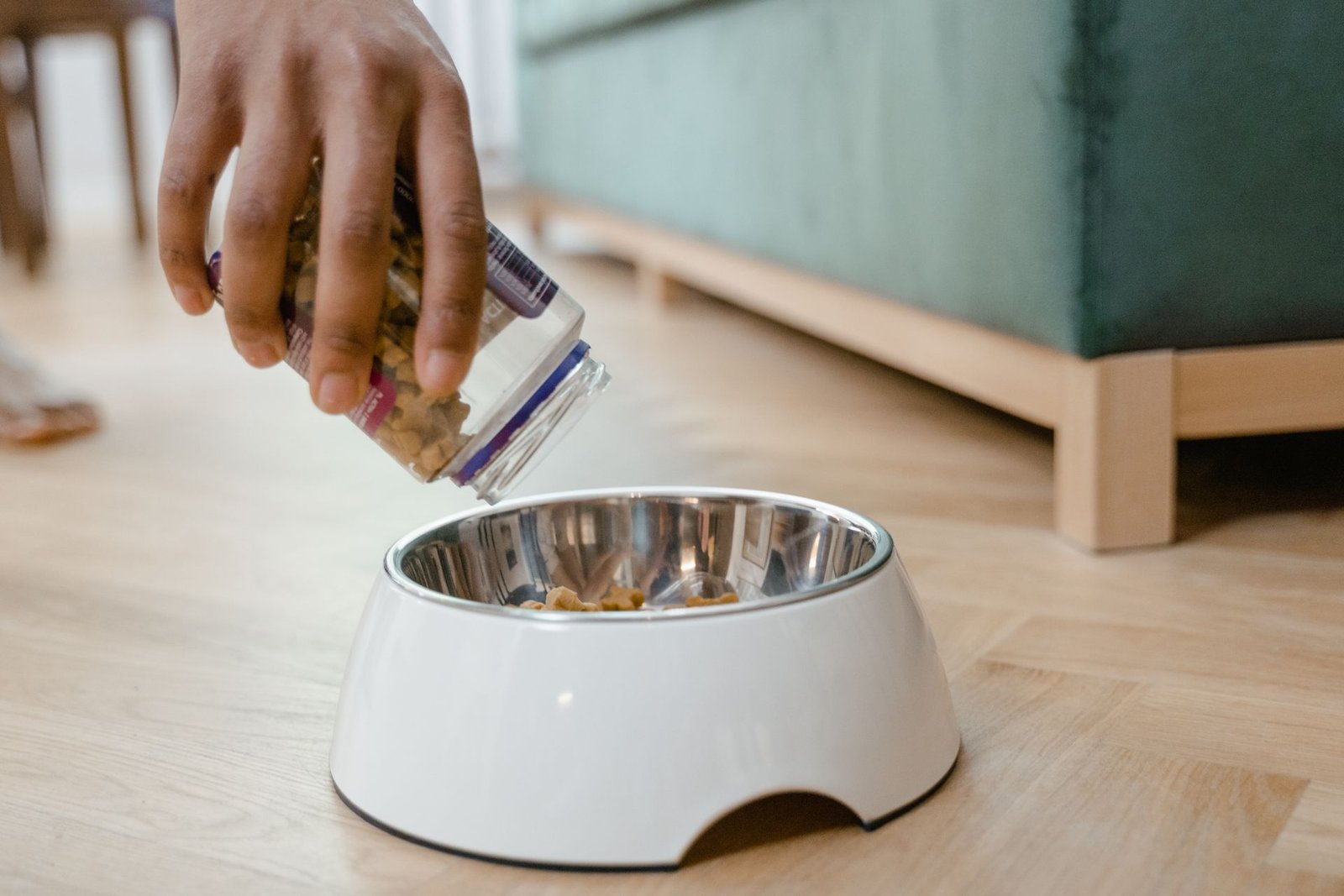
The kitchen scale (best). A basic digital scale costs little and removes all guesswork: weigh the daily ration in grams once, note the number, and repeat. Grams don’t care about kibble size or shape. If your food lists feeding amounts in grams (many do, alongside cups), the scale is the intended tool. This is the method veterinary nutritionists use, and it’s the single biggest accuracy upgrade most owners can make.
A proper dry measuring cup (good). If you prefer cups, use an actual 8-ounce dry measuring cup — the kind from a baking set — filled level, not heaped. Studies of owner measuring habits have repeatedly shown that “scoops” vary enormously: the same nominal “cup” can deliver 20–30% more or less depending on who’s scooping and how generous the heap is. Level it off with a knife edge and be consistent.
The food scoop / coffee mug (retire it). Random scoops and mugs are the enemy of portion control. If a scoop is all you have, calibrate it once: scoop your usual way, weigh or measure it properly, and mark the true amount on the scoop. You’ll often discover your “cup” is really 1⅓ cups — an instant explanation for creeping weight.
Pre-portioning. For multi-person households (where everyone “just gives a little”), pre-portion the day’s food into a container each morning. When the container’s empty, feeding is done — no negotiations, no double-dinners because nobody knew the dog was already fed. Automatic feeders can serve the same role for schedule consistency, though they work best for kibble and for dogs who don’t need mealtime supervision.
Whatever tool you choose, consistency matters more than perfection. The same slightly-imperfect measure every day still lets you adjust intelligently; a different random scoop every meal makes the body-condition feedback loop meaningless. Pick one method, use it every time, and your portions become data instead of guesses.
Adjusting for Life Stage and Lifestyle
The same dog needs different portions at different life chapters. Here’s how to think about each:
Puppies need more calories per pound than adults — they’re building an entire body. Feed a growth-formulated food (check the AAFCO statement for your puppy’s expected adult size), follow the puppy feeding guide, and weigh often; growing puppies should gain steadily, not balloon. Most puppies eat three to four meals daily until about six months, then transition to two.
Adults (1–7 years) are the baseline everything else adjusts from. Neutered dogs typically need somewhat fewer calories than intact dogs of the same size — neutering lowers metabolic rate, which is why the post-neuter pudge is such a classic. If your dog was neutered recently and the waistline is softening, that’s your cue to trim portions slightly, not a mystery.
Seniors (7+ years, earlier for large breeds) often need fewer calories as metabolism and activity ease off — but not less protein. Aging dogs need quality protein to maintain muscle. The adjustment is usually “a bit less food” or a senior formula with adjusted calories, never a starvation diet. Weight loss in seniors should always involve your vet, since it can signal health issues rather than a portion problem.
Active and working dogs — agility competitors, herding dogs, hunting partners, serious hiking buddies — can need double or more the calories of a house pet the same size. Feed for the workload: increase on heavy training days, ease back in the off-season. These dogs often do best on calorie-dense foods so the volume stays reasonable.
Pregnant and nursing dogs have sharply increased needs, especially during nursing, when a mother can need two to four times her normal calories. This is firmly vet-guided territory — both the amount and the specific food matter enormously here.
Treats, Toppers, and Table Scraps: The Hidden Calories
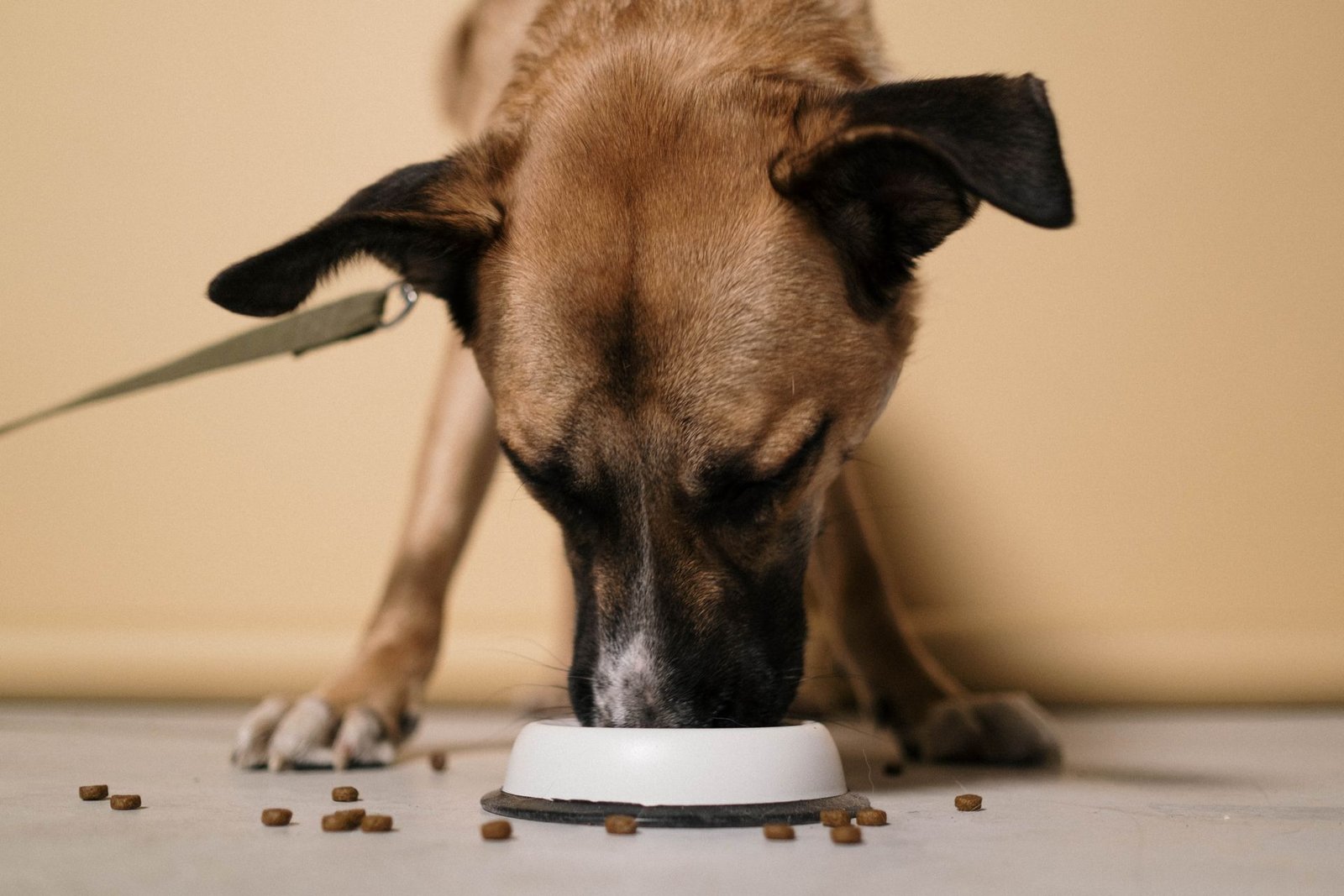
Here’s where most portion plans quietly fall apart: everything besides the main meals counts. The widely used guideline is the 10% rule — treats and extras should make up no more than about 10% of daily calories. For a dog eating 1,000 kcal/day, that’s 100 kcal of treats: roughly a medium dog biscuit or two, not a handful.
Practical ways to keep extras honest:
- Measure treats like meals. If you’re training heavily (puppy class, recall work), use part of the daily kibble ration as training treats — same nutrition, zero extra calories.
- Know your treat calories. Many treats list kcal per piece; if yours doesn’t, assume training-size treats run 5–15 kcal each and biscuits 30–80+. Those numbers add up terrifyingly fast.
- Count toppers and mix-ins. A spoonful of wet food, pumpkin, or yogurt on top of kibble has calories — delicious, often nutritious calories, but calories. Reduce the kibble slightly to make room.
- Table scraps are the wild card. Beyond the calorie chaos, some human foods are unsafe for dogs. If scraps happen, keep them tiny, infrequent, and safe — and honestly account for them.
The goal isn’t treat prohibition — treats are joy, training tools, and bonding. The goal is awareness: once you know the 10% frame, you can be generous within it instead of accidentally doubling dinner.
🩺 A note from the nutrition desk
Portion guidance here is educational and designed for healthy adult dogs. Puppies, seniors, pregnant or nursing dogs, and dogs with diabetes, kidney disease, thyroid issues, or any condition affecting weight need individualized plans from their veterinarian — calorie needs and safe rates of weight change vary enormously with health status. Never put a dog on a strict weight-loss diet without veterinary supervision, and bring your food’s calorie information to the appointment; it makes the vet’s job much easier.
Frequently Asked Questions
How do I know if I’m feeding too much?
The body condition check is your best tool: ribs hard to feel, no visible waist from above, and a sagging belly line all suggest excess. Steady weight gain on the scale confirms it. Reduce portions by 10–15%, keep treats within the 10% rule, and reassess in a few weeks.
Should I feed by the bag’s guide or by calories?
Use both: the bag’s guide for a starting portion, calorie math to sanity-check it, and body condition to finalize. If the three disagree, trust body condition first and discuss the gap with your vet — individual metabolism varies.
Is it better to feed once or twice a day?
For most adult dogs, twice daily beats once — it’s gentler on digestion, steadier for energy and blood sugar, and reduces the bloat risk associated with one huge meal (especially in large, deep-chested breeds). Puppies need three to four meals. The total daily portion stays the same; you’re just dividing it.
My dog always seems hungry. Am I underfeeding?
Maybe — or maybe not. Some breeds (Labradors, famously) are genetically enthusiastic about food regardless of portion adequacy. Check body condition first: if weight and condition are ideal, the hunger is appetite, not need. Strategies that help: split food into more meals, use slow-feeder bowls, add water or low-calorie veggies (with vet approval) for volume, and keep treats earned through training.
Do I need to change portions when I switch foods?
Almost always, yes. Foods differ in calorie density, so the same volume of a new food can mean significantly more or fewer calories. Recalculate using the new food’s kcal/cup and its feeding guide, transition gradually over 7–10 days, and watch body condition through the switch.
How quickly should I adjust if my dog is gaining weight?
Gently: reduce by 10–15% and reassess in 2–4 weeks. Dogs should lose weight slowly — rapid restriction risks nutrient shortfalls and rebound hunger. If weight doesn’t budge after a month of honest measuring (including treats!), talk to your vet about a supervised plan and a health check.
Is free-feeding (leaving food out all day) okay?
It works for a minority of self-regulating dogs, but for most it’s a portion-control disaster — you can’t measure intake, multi-dog households become unfair, and appetite changes (an early illness signal) go unnoticed. Scheduled meals are better for almost every dog: you control portions, monitor appetite, and build a routine your dog’s digestion can rely on.
Conclusion: Measure, Observe, Adjust
Figuring out how much to feed a dog isn’t a one-time calculation — it’s a quiet, ongoing conversation with your dog’s body. Start with the feeding guide calibrated to ideal weight, sanity-check with calorie math, measure consistently with a real cup or scale, keep treats inside the 10% frame, and let the monthly rib-waist-tuck check have the final word. Adjust for life stage and lifestyle as the years go by, and loop in your veterinarian whenever health conditions enter the picture.
Do this, and “how much should I feed my dog?” stops being a source of anxiety and becomes what it should be: a simple system running quietly in the background while you get on with the good stuff — the walks, the training, the couch time. For more on building the routine around those portions, explore our feeding guides collection, and for choosing what goes in the bowl, our dog food and nutrition guides have you covered.