

How Much Should I Feed My Cat? A Complete Portion Guide
Cats are masters of subtlety — and that includes their eating. One cat grazes daintily all day and stays lean; another inhales every meal and rounds out like a furry ottoman. Figuring out how much to feed a cat is trickier than it looks, because feline calorie needs are small (so small errors matter hugely), feeding styles vary enormously, and multi-cat households turn every meal into a logistics puzzle.
This guide gives you the complete system: starting portions from the label, the calorie math behind them, hands-on body condition checks designed for cats, measuring methods that actually work, and adjustments for kittens, adults, seniors, and multi-cat homes. By the end, you’ll know exactly how much food belongs in your cat’s bowl — and how to tell when the answer needs updating.
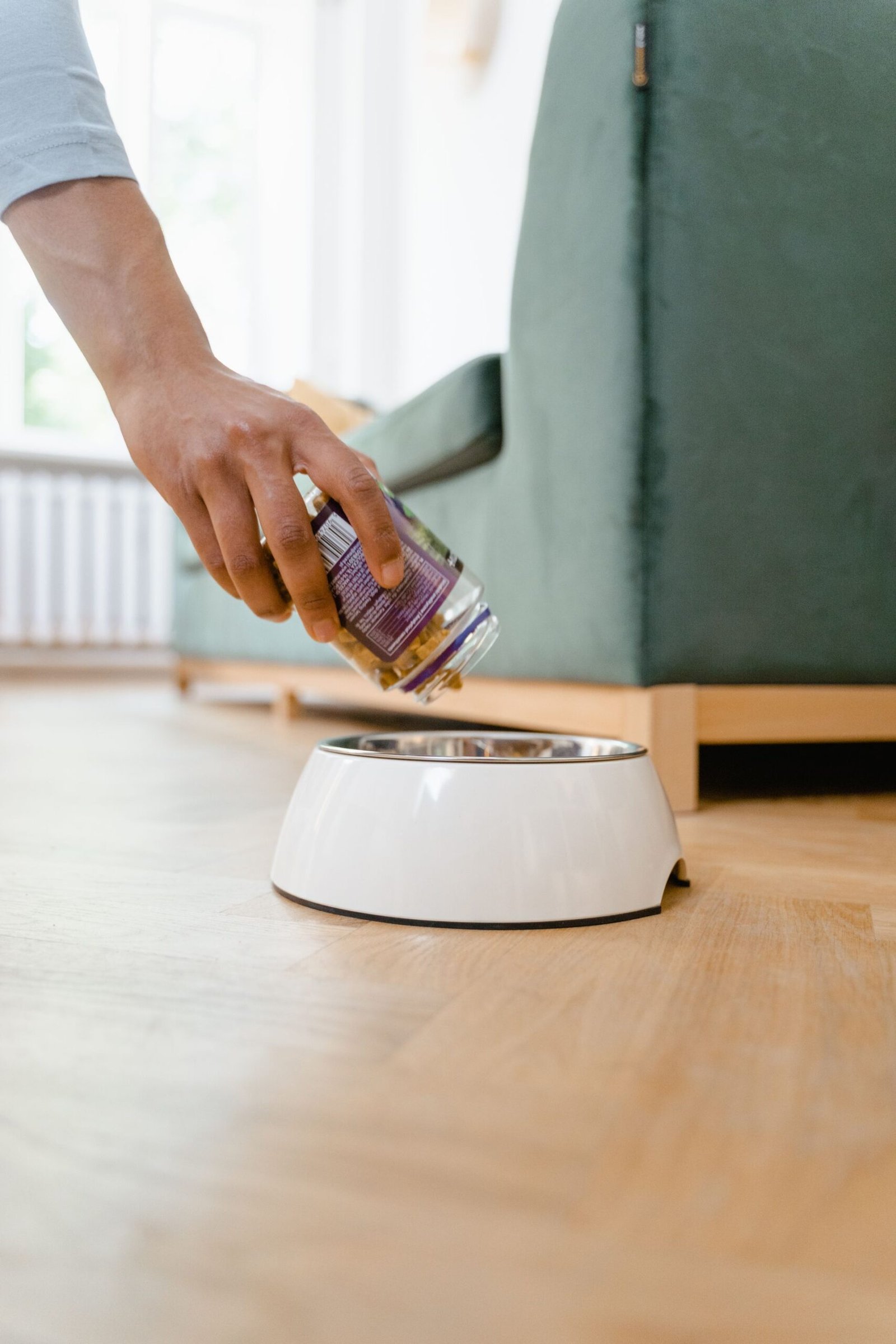
🐾 Key Takeaways
- Cat calorie needs are small — a typical indoor adult needs roughly 200–300 kcal/day, so even tiny over-portions add up fast.
- Start with the feeding guide on the label (calibrated to ideal weight), then personalize with calorie math and body condition.
- Learn the feline body condition check — ribs, waist, and belly are more reliable than the scale alone.
- Measure food with a scale or proper measuring cup; “eyeballing” is the number-one cause of portion creep.
- Wet food changes the math — its high moisture means larger-looking portions with fewer calories per bite; always compare on calories, not volume.
- Treats count toward the daily total, and your veterinarian should guide portions for kittens, seniors, and cats with health conditions.
Why Cat Portions Are Trickier Than They Look
Dogs come with a built-in portion advantage: they’re big enough that small measuring errors matter less. Cats have no such margin. An average indoor cat needs only a couple hundred calories daily — compare that to a medium dog’s thousand-plus. A single extra tablespoon of kibble, or one too many treats, represents a far larger percentage of a cat’s diet than the equivalent slip in a dog’s. This is why indoor cats gain weight so quietly and why “just a little extra” is the most expensive phrase in feline feeding.
Compounding the problem, cats are individualistic eaters in ways dogs rarely are. Some cats genuinely self-regulate — eating small amounts through the day and holding a perfect weight for years. Others will eat everything available, immediately, and then lobby for more. Breed tendencies exist (some breeds are famously food-driven), but personality rules. You can’t copy your friend’s feeding routine and expect it to work; you have to read your cat.
Then there’s the multi-cat factor. In single-cat homes, you control the whole food environment. Add a second cat and suddenly you’re managing different appetites, different metabolisms, different medical diets — and one cat who considers the other’s bowl a personal buffet. Portion control in multi-cat homes is as much about management (separate feeding stations, supervised meals, microchip feeders) as about math. We’ll tackle that below.
The good news: once you learn the system, cat portions become as routine as dog portions. The principles are identical to our dog portion guide — start from the label, personalize with calories, verify with body condition — just calibrated to feline scale. And the label-reading skills from our cat food label guide (especially finding calorie content) are your essential preparation.
Starting Portions: Reading the Feeding Guide Right
Every complete cat food carries a feeding guide — typically a table matching weight to daily amounts. Here’s how to use it properly:
Feed for ideal weight, not current weight. If your 14-pound cat should weigh 11, use the 11-pound row. Feeding guides assume healthy weight; feeding an overweight cat for their current weight maintains the problem.
Mind the units. Cat feeding guides often show amounts in cups, ounces, grams, or cans per day. Grams (via a kitchen scale) are the most accurate; if using cups, use a real measuring cup, leveled. For wet food, “one 3-oz can” is straightforward — but note that can sizes vary (3 oz vs. 5.5 oz), so check.
Find the calorie content. This is the number that unlocks everything: kcal per cup, per ounce, or per can. Cat foods vary significantly in calorie density, and the feeding guide’s portions reflect it — but understanding why prevents the classic mistake of feeding the same volume after switching to a richer food.
The guide is a starting point. It describes an average cat. Yours may run hotter or cooler metabolically, be more or less active, or be neutered (neutered cats typically need fewer calories — the post-neuter weight gain is a real and common phenomenon). Start with the guide, then let body condition and weight trends refine the answer over 2–4 weeks.
Total daily amount, split across meals. The guide shows the full day’s food — divide it into meals rather than serving it at once. Most adult cats do well on two meals daily (some prefer three smaller ones); kittens need three to four. The schedule matters less than the total, but regular mealtimes make appetite monitoring far easier than free-feeding.
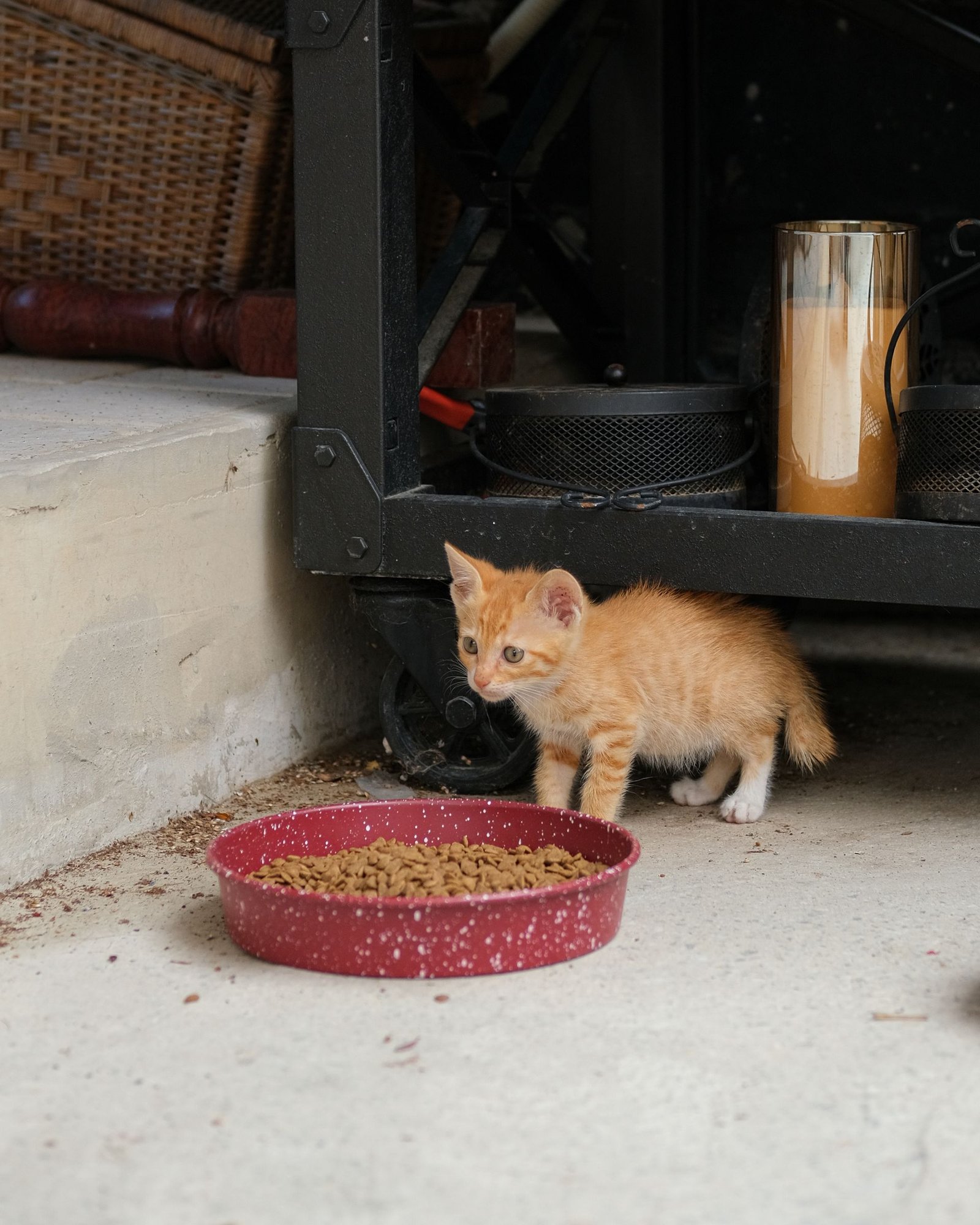
The Calorie Math for Cats
For a personalized starting point, veterinary nutrition uses Resting Energy Requirement (RER): RER = 70 × (body weight in kg)^0.75. For a 4.5 kg (10 lb) cat: 70 × 4.5^0.75 ≈ 70 × 3.08 ≈ 216 kcal at rest. Then multiply by a factor:
- Neutered adult, indoor: × 1.2–1.4 → roughly 260–300 kcal/day
- Intact adult: × 1.4–1.6
- Active/outdoor cat: × 1.6–1.8
- Weight loss (vet-supervised): × 0.8–1.0 of ideal-weight RER
- Kitten (growing): × 2.0–2.5 of expected adult-weight RER
- Pregnant/nursing: × 2.0–4.0+ (firmly vet-guided)
Notice how small these numbers are — and therefore how much precision matters. A 50-kcal daily surplus (one extra treat, a heaped scoop) is nearly 20% over budget for a 260-kcal cat. That’s the entire explanation for the quiet feline weight epidemic: not dramatic overfeeding, but small daily surpluses compounding over months.
Convert calories to food using the label’s kcal figures: daily kcal ÷ kcal per cup (or per can) = daily amount. A 280-kcal need on a 400 kcal/cup dry food = 0.7 cups daily. On a 100 kcal/3-oz-can wet food = nearly 3 cans. Write the number down; revisit it whenever food, weight, or lifestyle changes.
Wet vs. dry changes the volume picture dramatically. Wet food’s 75–82% moisture means the volume looks generous while calories stay modest — a full small can might be just 70–100 kcal. Dry food is the opposite: calorie-dense, so small volumes carry big energy. When mixing formats (a strategy many vets recommend for hydration), do the calorie math for each component and add them — don’t just halve each by eye.
The Feline Body Condition Check
Charts get you close; your cat’s body tells the truth. The 9-point body condition scale works for cats just as for dogs, with 4–5 being ideal. Here’s the at-home version:
- Rib check: With light pressure, you should feel ribs under a slight fat covering — like feeling the back of your hand. Prominent ribs with no cover = too thin; ribs buried under padding = too heavy. (Long-haired cats hide their ribs visually — always check by touch, not sight.)
- Waist check: Viewed from above, there should be a visible waist behind the ribs — a gentle inward curve. A straight or bulging line from ribs to hips suggests excess weight.
- Belly check: Viewed from the side, the belly should tuck up slightly behind the ribs. Many cats have a primordial pouch — a natural flap of skin on the lower belly that’s normal feline anatomy, not fat. Learn to distinguish the pouch (loose skin that sways) from genuine abdominal fat (firm, rounded fullness).
If condition looks right and weight is stable, portions are correct — whatever the chart said. Adjust in 10% increments: reduce slightly if the waist is disappearing, increase if ribs are too prominent. Recheck in 2–4 weeks. And weigh periodically — trends over months matter more than any single reading.
When to worry promptly: unexplained weight loss in cats deserves faster attention than weight gain. Cats who lose weight while eating normally — or who stop eating — should see a vet sooner rather than later, since feline weight loss often signals medical issues (thyroid, kidney, dental, and other conditions) rather than portion problems.
Measuring Methods That Actually Work
The kitchen scale (best). Weigh the daily ration in grams. It’s fast, exact, and immune to kibble-size illusions. If your food lists grams on the feeding guide, this is the intended method — and it’s the single biggest accuracy upgrade for cat owners, given how small feline portions are.
A proper measuring cup (good). Use a real dry measuring cup (many cat portions are ⅓–¾ cup, so a 1-cup measure with clear markings works), leveled off. The usual warnings apply: coffee mugs and random scoops are not measuring devices. Calibrate any scoop once against a real measure and mark it.
Pre-portioning (smartest for busy homes). Measure the day’s total into a container each morning (or portion the week’s into daily bags). Everyone in the household feeds from the container; when it’s empty, feeding is done. This single habit eliminates the “I thought you fed her” double-dinner — a classic multi-person-household failure mode.
For wet food: cans and pouches are naturally pre-portioned — just be consistent about can size and count partial cans honestly. A “can a day” routine works beautifully if the can’s calories match the cat’s needs; if not, adjust with a measured dry-food complement.
Whatever method you choose, consistency beats perfection. The same slightly-imperfect measure daily still lets body condition guide your adjustments; random scoops make the feedback loop meaningless.
Meals vs. Free-Feeding: The Great Feline Debate
Few topics divide cat owners like free-feeding (leaving dry food out all day) versus scheduled meals. Here’s the honest breakdown:
The case for free-feeding: it suits cats’ natural grazing pattern — small, frequent meals — and works fine for the subset of cats who genuinely self-regulate. It’s convenient, and for single, lean, self-regulating cats, it’s harmless.
The case against: most cats don’t self-regulate well with unlimited calorie-dense kibble. Free-feeding makes intake unmeasurable (you can’t tell who ate how much, critical in multi-cat homes), masks appetite changes (often the earliest sign of illness), encourages mindless overeating, and makes wet-food incorporation awkward. It’s also incompatible with weight-loss plans and medical diets.
The practical middle ground most vets favor: scheduled meals (two to three daily) with measured portions — plus, if your cat is a healthy grazer, you can leave the measured daily dry-food portion out for grazing while serving wet food as scheduled meals. You get the best of both: natural eating rhythm and measurable intake. What you don’t get is plausible deniability about how much was eaten — and that’s the point.
Treats and Extras: The Feline 10%
Everything in our dog treat guide about the 10% rule applies to cats — with the feline twist that the budget is tiny. Ten percent of a 280-kcal day is 28 kcal: roughly two small commercial treats, or a tablespoon-ish of wet-food topper. A single large dental treat can swallow most of the budget alone.
Cat-specific treat wisdom:
- Use the daily ration. Reserve a spoonful of the regular wet or dry food for “treats” — same nutrition, zero budget impact, and most cats accept it happily as a between-meal bonus.
- Single-ingredient options shine. Tiny bits of plain cooked chicken, freeze-dried meat treats, or a lick of meat baby food (no onion/garlic) are high-value and simple. Break commercial treats smaller — most are sized generously.
- Beware the treat spiral in multi-cat homes. Treating one cat in front of others creates fairness demands that multiply the budget. Treat all or treat none — or treat separately.
- Dental treats count double-duty. They’re often the largest single treat expense, calorie-wise. If you use them daily, subtract their calories from meals honestly.
- Catnip and play aren’t calories. When the urge to spoil strikes, a play session or catnip toy delivers joy with zero nutritional impact — often the best “treat” of all.
The mindset shift: for cats, treats are garnish, not a food group. A tiny, thoughtful garnish — delivered with ceremony — satisfies the human urge to spoil and the feline love of ritual, without touching the waistline.
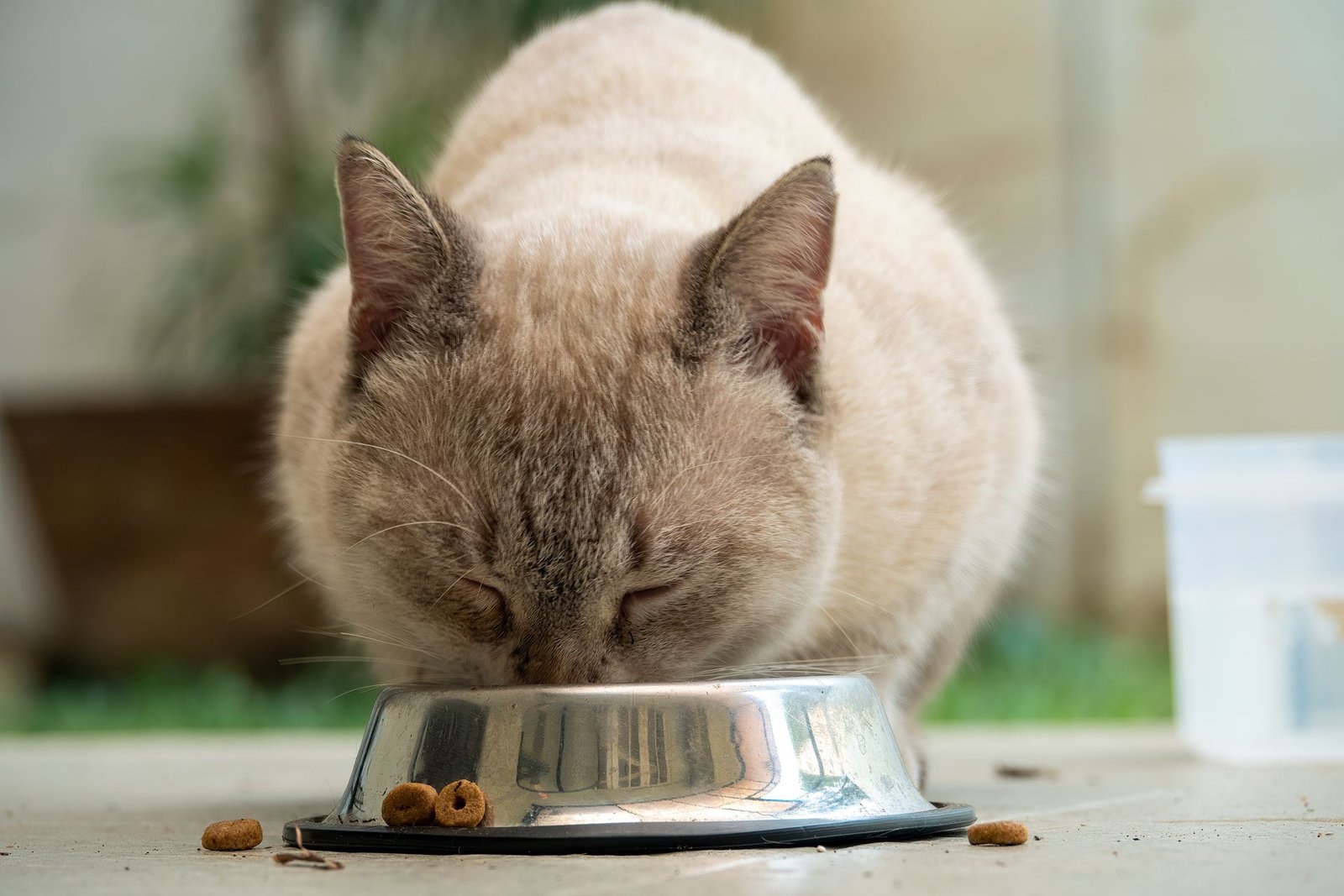
Life Stages and Multi-Cat Homes
Kittens need calorie-dense growth food in three to four meals daily, with portions increasing as they grow — weigh kittens weekly if you can (a kitchen scale works for tiny kittens). They should grow steadily and stay lean; free access to kitten food is common advice, but measured meals build better habits and make the adult transition smoother. Most kittens move to adult food around 12 months.
Adults are the baseline: measured meals, 10%-ish treat budget, monthly condition checks. The adult variables are neuter status (neutered = fewer calories needed — adjust proactively, not after the weight arrives) and activity (indoor vs. outdoor is the big divider).
Seniors (10+ years) often need more calories per pound, not fewer — aging cats can struggle to maintain weight and muscle, the opposite of the dog pattern. Senior cats losing weight need vet attention promptly (hyperthyroidism, kidney disease, and dental pain are common culprits), and the nutritional response is individualized. Never assume a thinning senior “just needs more food” — find out why first.
Multi-cat homes need systems, not just math:
– Feed separately — different rooms or stations, so each cat’s intake is measurable and medical diets stay with the right cat.
– Supervise or time-limit meals — pick up bowls after 20–30 minutes. Grazers adapt to schedules within days.
– Microchip feeders are the elegant solution for prescription-diet households: only the registered cat’s chip opens the lid.
– Feed by individual need — the 6-pound senior and the 14-pound youngster get different portions, even from the same bag. One bowl for all is how the small cat gets fat and the big cat gets thin.
🩺 A note from the nutrition desk
Portion guidance here is educational and intended for healthy cats. Kittens with growth concerns, pregnant or nursing queens, seniors losing weight, and cats with diabetes, kidney or thyroid disease, urinary issues, or obesity need individualized feeding plans from their veterinarian. Never put a cat on a strict weight-loss diet without veterinary supervision — cats must lose weight slowly, and crash dieting can trigger dangerous liver disease. Bring your food’s calorie information to the appointment.
Frequently Asked Questions
How much should an average indoor cat eat per day?
A typical 10-pound neutered indoor adult needs roughly 250–300 kcal/day — but “average” hides wide variation. Start with the feeding guide for your cat’s ideal weight, refine with the calorie math above, and let body condition confirm. When in doubt, your vet can pinpoint the number in seconds.
Is it okay to leave dry food out all day?
It works for genuinely self-regulating cats, but most cats do better with measured, scheduled meals — you can track intake, spot appetite changes early, manage multi-cat fairness, and incorporate wet food. A good compromise: leave the measured daily dry portion out for grazing, served alongside scheduled wet meals.
Why is my cat always hungry?
First check body condition — some cats are just enthusiastic eaters (and some breeds are famously food-driven). If weight is ideal, try splitting food into more meals, adding wet food for volume, using puzzle feeders to slow eating, and ensuring the food is complete and satisfying. If hunger comes with weight loss, see your vet — increased appetite with dropping weight can signal medical issues like hyperthyroidism or diabetes.
How do I switch my cat to measured portions?
Gradually. Measure what you’re currently feeding (you may be surprised), then adjust toward the target over a week or two — sudden cuts trigger protest and, in overweight cats, must be slow for liver safety. Move grazers to schedules by offering meals at set times and removing uneaten food after 30 minutes; most cats adapt within days.
Do indoor cats need less food than outdoor cats?
Usually yes — outdoor cats burn significantly more calories roaming, hunting, and thermoregulating. An indoor cat fed outdoor-cat portions will gain weight steadily. But “indoor” isn’t one activity level: a young indoor cat with climbing walls and play sessions may out-burn a sedentary outdoor lounger. Let body condition arbitrate.
My two cats need different amounts. How do I manage that?
Feed them separately — different rooms, supervised meals, or microchip-activated feeders for the truly determined food thief. Measure each cat’s portion individually, pick up bowls after 20–30 minutes, and never free-feed a shared bowl when needs differ. It’s a routine within a week.
Should kittens have unlimited food?
Many sources suggest it, but measured meals build better habits and let you track intake — important because appetite changes are health signals. Feed kittens three to four measured meals daily, increasing portions as they grow, and keep them lean. Unlimited grazing works only if the kitten genuinely self-regulates; many don’t.
Conclusion: Small Cat, Precise Portions, Big Payoff
How much should you feed your cat? Start with the label’s guide for ideal weight, personalize with calorie math, measure like you mean it, verify with the rib-waist-belly check, and adjust for life stage and household logistics. It’s a small system for a small animal — but the payoff is large: healthy weight, good hydration (especially with wet food in the mix), early illness detection through appetite awareness, and peaceful multi-cat mealtimes.
The through-line of feline feeding is attention: cats don’t announce portion problems loudly, so the owner’s quiet, consistent measuring does the talking. Master that, and the rest — the nutrition fundamentals, the label reading, the life-stage shifts — all falls into place. For the broader feeding picture, explore our feeding guides collection.