

Healthy Dog Treats: How to Choose and How Many Is Too Many
Few things light up a dog’s face like the rustle of the treat bag. Treats are training gold, bonding currency, and pure joy in biscuit form — but they’re also the sneakiest source of extra calories in most dogs’ diets. Choosing healthy dog treats isn’t about finding the one perfect biscuit; it’s about understanding what makes a treat genuinely good, reading treat labels with the same sharp eye you’d use for food labels, and knowing exactly where the line sits between “well-earned reward” and “too many.”
This guide covers the whole picture: the 10% treat rule that keeps extras honest, how to decode treat packaging, the real differences between training treats, dental chews, and long-lasting chews, and a simple budgeting system that lets you be generous without the guilt. Whether you’re training a new puppy or just love spoiling a senior, you’ll finish knowing precisely how many treats is too many — for your dog.

🐾 Key Takeaways
- The 10% rule: treats and extras should stay around 10% or less of your dog’s total daily calories — the other 90% should come from complete, balanced food.
- Read treat labels like food labels — named ingredients first, calorie content per treat, and an honest look at sugars and vague fillers.
- Match the treat to the job: tiny soft treats for training, dental chews for teeth, long-lasting chews for enrichment — one treat can’t do everything.
- Count every extra: table scraps, dental chews, stuffed Kongs, and training rewards all draw from the same 10% budget.
- Signs of too many treats include weight gain, skipped meals, soft stools, and begging behavior — adjust early rather than after the scale moves.
- For puppies, seniors, and dogs with health conditions, check treat choices with your veterinarian — some “healthy” treats aren’t right for every dog.
Why Treats Deserve Their Own Strategy
Most owners choose their dog’s main food carefully — reading labels, comparing options, asking the vet — and then grab treats as an afterthought. That’s backwards, because treats punch far above their weight in the diet. A medium milk-bone-style biscuit can carry 40–80 calories; a large dental chew, over 100. For a small dog eating 400 calories a day, three “little” treats can quietly add 30–40% to the daily intake. No main food, however excellent, can compensate for a treat habit running at triple its budget.
Treats also shape behavior beyond nutrition. Dogs are brilliant economists: they quickly learn which behaviors pay in treats and calibrate their enthusiasm accordingly. That’s wonderful for training — and it’s exactly why treat strategy matters. Random, unlimited treating teaches your dog that rewards fall from the sky for existing; structured treating teaches them that good choices earn good things. The same biscuit does different psychological work depending on how you deploy it.
Then there’s the health dimension. Treats are where low-quality ingredients hide most easily, because treat packaging gets less scrutiny than food packaging. Sugars, syrups, artificial colors, and vague “animal” ingredients appear on treat labels with depressing regularity — including on treats marketed as “natural” or “wholesome.” The good news: once you know how to read a dog food label, treat labels surrender their secrets just as fast. Same rules, smaller package.
The 10% Treat Rule: Your Daily Budget
The most useful number in treat feeding is 10%. Veterinary nutritionists widely recommend that treats and all other extras combined stay at or below roughly 10% of a dog’s total daily calories. The reasoning is nutritional, not moral: complete dog foods are carefully balanced — protein, fat, vitamins, minerals in precise ratios. Every calorie of treats displaces a calorie of that balanced nutrition. At 10%, the displacement is negligible. At 30–40%, your dog is effectively eating an unbalanced diet with a balanced-food garnish.
Putting the rule into practice takes thirty seconds of math, once:
- Know your dog’s daily calories. From our portion size guide: a typical 20 kg (44 lb) neutered adult needs roughly 1,000–1,100 kcal/day. Use your vet’s figure if you have one.
- Take 10%. That’s your treat budget: ~100–110 kcal for our example dog. For a 10 kg dog eating ~600 kcal, it’s ~60 kcal. For a 5 kg dog eating ~350 kcal, it’s ~35 kcal — sobering, and exactly why small dogs get chunky so easily.
- Learn your treats’ calories. Check the package for kcal per treat (many list it; if not, the company’s website usually does). Training minis: ~5–15 kcal. Standard biscuits: ~30–80. Large dental chews: ~80–130+.
- Spend the budget deliberately. 100 kcal = ten 10-kcal training treats, or two 50-kcal biscuits, or one dental chew. Same budget, very different strategies.
Two subtleties worth knowing. First, the 10% is for all extras combined — training treats plus the dental chew plus the table scrap plus the peanut-butter Kong. People routinely budget each category separately and end up at 30% without realizing it. One budget, everything counts, every day. Second, working and sporting dogs running high daily calories get a bigger absolute budget (10% of 2,500 is 250 kcal), which is one reason active dogs can “afford” more training rewards.
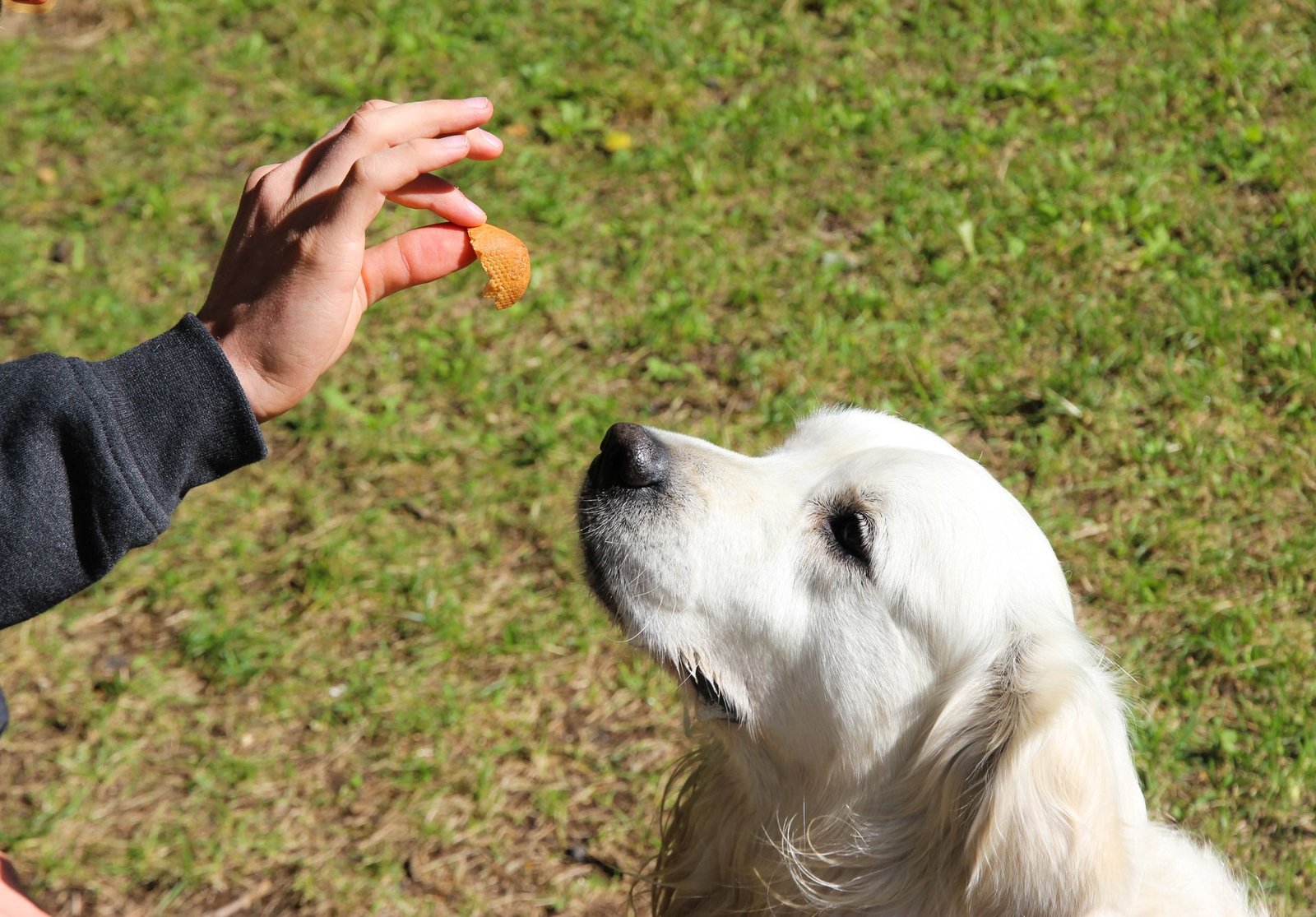
Reading Treat Labels: Same Skills, Smaller Package
Treat labels follow the same format as food labels — ingredient list by weight, guaranteed analysis, calorie content, manufacturer info — so your label-reading skills transfer directly. But treats have their own patterns worth knowing:
Treats aren’t required to be “complete and balanced.” Most carry no AAFCO adequacy statement, and that’s fine — they’re not meant as a diet. But it means the nutritional safety net is thinner: a treat-heavy diet has no balance guarantee at all, which is another reason the 10% rule matters.
Watch for sugar in its many disguises. Corn syrup, dextrose, sucrose, molasses, cane sugar — sweeteners add palatability (dogs love them) and calories without nutrition. A treat that lists a sweetener among its first ingredients is candy, not nutrition. This is especially common in soft, “gourmet” treats and some dental chews.
Colors are for you, not the dog. Red 40, Yellow 5, caramel color — dogs don’t care what color their treat is. Artificial colors in treats are pure marketing, and they’re an easy filter: plenty of good treats skip them.
“Made with real chicken” might mean 3% chicken. Treat marketing uses the same weasel words as food marketing. “Made with” and “flavored” have specific (and minimal) regulatory meanings — “chicken-flavored” treats may contain no chicken at all, just flavoring. Read the actual ingredient list.
Calorie opacity is a red flag. Reputable treat makers list kcal per treat or per weight. If a company hides this basic information, wonder what else they’re hiding. The best treat brands put calories front and center — they know informed owners are their best customers.
Jerky and single-ingredient treats deserve a mention: freeze-dried meat treats and single-ingredient jerky are often excellent — simple, high-value, easy to break into training-size pieces. Just verify the sourcing and manufacturing standards (reputable brands are transparent about both), and remember they’re still calories that count toward the budget.
Matching the Treat to the Job
Not all treats do the same work. Choosing by purpose instead of by packaging is the fastest upgrade most owners can make:
Training treats should be tiny (pea-sized), soft (fast to eat — a crunchy biscuit breaks training flow while the dog chews), aromatic (smell drives motivation), and low-calorie (you’ll use dozens). Commercial training minis work, but so does dicing your dog’s regular kibble smaller, or using tiny bits of plain cooked chicken — same nutrition as dinner, zero budget impact. For a heavy training day (puppy class, recall practice), reduce the evening meal slightly to make room.
Dental chews and treats occupy a real niche: products with proven texture or ingredients that reduce plaque and tartar. Look for the VOHC (Veterinary Oral Health Council) seal — it’s the independent verification that a dental claim actually holds up. But keep perspective: no chew replaces brushing, and dental chews are often calorie-dense (they need to be chewed a while to work). Budget their calories like any other treat.
Long-lasting chews (bully sticks, yak chews, safe rubber toys stuffed with food) serve enrichment — mental work that tires dogs out beautifully. They’re wonderful for crate time, rainy days, and alone-time settling. The tradeoff: calories vary wildly and some are very calorie-dense. A bully stick can carry a few hundred calories — that’s not a “treat,” that’s a meal’s worth. For heavy chewers, factor chews into the daily food math, not the treat budget.
“Healthy” human foods as treats — blueberries, apple slices (no seeds), carrots, green beans, plain cooked sweet potato — can be excellent low-calorie options many dogs love. Keep portions sensible, introduce new foods gradually, and verify safety first (grapes, raisins, onions, xylitol/birch sugar, chocolate, and macadamia nuts are among the dangerous ones). When in doubt, ask your vet before sharing.
Homemade Dog Treats: Simple, Safe, and Budget-Friendly
You don’t have to buy treats at all. Some of the best training rewards come from your own kitchen — cheaper, simpler, and with ingredient lists you write yourself:
The easy wins (no recipe needed): tiny cubes of plain cooked chicken breast, small bits of hard-boiled egg, blueberries, watermelon chunks (seedless), baby carrots, green beans, apple slices (no seeds or core). Most dogs go wild for these, the calories are modest and countable, and there’s nothing to decode on a label.
Simple baked treats (for the inclined): a basic dough of oat flour, unsweetened applesauce or pumpkin purée, a spoonful of xylitol-free peanut butter, and an egg — rolled thin, cut small, baked until crisp. Keep batches small (no preservatives means they spoil), store airtight, and refrigerate or freeze extras. These make wonderful high-value rewards because they’re novel and aromatic.
The safety rules are non-negotiable. Never use xylitol (also labeled birch sugar) — it’s extremely toxic to dogs even in small amounts — and skip chocolate, grapes, raisins, onions, garlic, macadamia nuts, and excessive salt. Keep homemade treats to the same 10% budget; “homemade” means wholesome, not calorie-free. And introduce any new food gradually — even healthy additions can upset a sensitive stomach in large first servings.
Homemade treats shine brightest in training, where you need volume: a bag of chicken cubes costs a fraction of premium training treats and most dogs value them more. The tradeoff is convenience and shelf life — which is why many owners land on a hybrid: homemade for heavy training days, quality commercial treats for the treat jar. Either way, the 10% budget keeps everything honest.

How Many Is Too Many? Reading the Signs
The 10% rule gives you the math; your dog gives you the feedback. Watch for these signs the treat budget is overflowing:
Weight gain despite “eating the same.” The classic. If meals haven’t changed but the waistline is softening, treats are suspect number one — they’re the part of the diet nobody measures. Revisit the budget honestly, counting everything.
Skipped or picky meals. A dog holding out for treats isn’t “not hungry” — they’re holding out for the good stuff. This is both a nutrition problem (unbalanced intake) and a training problem (you’ve taught them that patience earns upgrades). Reset by making meals the main event again: treats earned, meals expected.
Soft stools or digestive grumbles. Rich, varied treats in large quantities upset more stomachs than any single food. If stools are inconsistent, simplify: cut extras back to the 10% budget with a single treat type and see if things firm up.
Begging intensifies. Begging is a trained behavior — every successful beg teaches the dog to beg harder. If treat-giving has become constant and indiscriminate, the dog isn’t being “spoiled with love”; they’re being trained to pester. Structured treating (earned rewards, set times) fixes this faster than willpower.
Dental issues from soft treats. An all-soft-treat diet contributes nothing to dental abrasion. If treats are constant and teeth are suffering, shift some of the budget to VOHC-accepted dental options — and talk to your vet about a real dental-care routine.
The fix for all of these is the same: measure the treats for one week. Actually count them, look up the calories, and compare to the 10% budget. Most owners are genuinely shocked by the result — and that week of honesty usually fixes the problem permanently, because you can’t unsee the math.
Treats for Special Dogs: Puppies, Seniors, and Sensitive Stomachs
Puppies are treat paradoxes: they need the most training rewards and have the most sensitive digestion. Use the tiniest, softest, simplest treats you can find — single-ingredient options are ideal — and lean heavily on kibble-from-the-daily-ration as rewards. Keep new treat types to one at a time so you can identify culprits if stools loosen. And remember that puppy calorie needs are high but puppy stomachs are small: the 10% rule still applies.
Seniors often need softer treats (dental issues are common with age) and lower-calorie options (metabolism slows). This is also the life stage where health conditions cluster — kidney disease, for instance, changes what’s appropriate protein- and phosphorus-wise. Treat choices for senior dogs deserve a vet’s glance, not just a marketing claim.
Dogs with allergies or sensitivities need treats as carefully chosen as their food. If your dog is on a limited-ingredient or novel-protein diet (especially during an elimination trial), every treat must comply with the trial — one non-compliant biscuit can invalidate weeks of careful work. Hypoallergenic-labeled treats exist, but “hypoallergenic” isn’t a regulated term; check ingredients against your vet’s approved list.
Overweight dogs on a plan still deserve treats — a joyless diet is a failed diet. The trick is spending the (smaller) budget brilliantly: tiny high-value rewards, veggie options with vet approval, and making every treat earned through activity. Many owners find that structured treating actually helps weight loss, because it replaces mindless snacking with purposeful rewarding.
🩺 A note from the nutrition desk
Treat guidance here is for healthy dogs and is educational, not prescriptive. Dogs with diabetes, pancreatitis, kidney or liver disease, food allergies, or obesity need treat plans tailored to their condition — some common “healthy” treats (high-fat chews, certain proteins, sugary biscuits) can be genuinely harmful for these dogs. Always check treat choices with your veterinarian when health conditions are in play, and bring the treat package to the appointment — the label tells the vet everything they need to know.
Frequently Asked Questions
How many treats can I give my dog per day?
Use the 10% rule: treats plus all extras should stay around 10% of daily calories. For a dog eating 1,000 kcal/day, that’s ~100 kcal of treats — roughly ten 10-kcal training minis or two 50-kcal biscuits. Count every extra, including dental chews and table scraps.
Are milk-bone-style biscuits healthy?
They’re fine as occasional treats within the calorie budget, but read the label: many contain sugars, artificial colors, and vague ingredients. There are usually better options at similar prices — compare calorie content and ingredient lists rather than going by familiarity.
What’s the best treat for training?
Small (pea-sized), soft, smelly, and low-calorie. Commercial training minis, tiny bits of plain cooked chicken, or pieces of your dog’s own kibble all work brilliantly. The best training treat is the one your dog finds irresistible — experiment to find their high-value favorite, then reserve it for training.
Can treats replace meals?
No. Treats aren’t complete and balanced — they lack the precise nutrient ratios of a formulated food. A treat-heavy diet is an unbalanced diet, whatever the treats cost. Keep treats to ~10% and let complete food do the nutritional heavy lifting.
Are rawhide chews safe?
Rawhide is controversial: it can pose choking and blockage risks, especially for gulpers, and quality varies enormously. Many vets and behaviorists prefer alternatives like bully sticks (supervised), yak chews, or safe rubber enrichment toys. Whatever you choose, always supervise chewing and size the chew to the dog.
My dog is overweight but I can’t stop giving treats. Help?
You’re not alone — and you don’t have to stop. Switch to tiny, low-calorie treats, make every treat earned (a sit, a trick, a walk milestone), use part of the daily kibble ration as rewards, and measure for one honest week. Most owners find the weight starts moving once the invisible treat calories become visible.
Are grain-free treats better?
Not inherently — the same logic as grain-free food applies. Grain-free treats simply use different starches; they’re not automatically healthier or lower-calorie. Some are excellent, some are candy with better marketing. Judge the ingredient list and calorie content, not the grain-free badge.
Can puppies have the same treats as adult dogs?
Mostly yes, but go smaller, softer, and simpler. Puppy teeth and digestion are works in progress — tiny single-ingredient treats or kibble pieces are ideal. Avoid very hard chews for young puppies (they can damage developing teeth), and keep rich new treats to small introductions.
Conclusion: Treats Are Tools — Use Them Like It
Healthy dog treats aren’t about finding a magic biscuit — they’re about a system: the 10% calorie budget, labels read with clear eyes, treats matched to their job, and honest counting when things drift. Get the system right and treats become what they should be: powerful training tools, genuine joy, and bonding moments — all without quietly wrecking the diet.
Start today with the one-week honesty challenge: measure every treat, look up the calories, and compare to your dog’s 10% budget. Then explore our treats and special diets guides for more, and revisit how much to feed your dog to keep the whole picture in balance. Your dog will never know about the budget. They’ll just know the treats keep coming — and that’s exactly how it should feel.