

One cat is on a weight-loss plan. The other is a growing kitten who needs all the calories she can get. The dog will eat literally anything that hits the floor, including, with great enthusiasm, the cats’ food. If this sounds like your home, you already know the truth: feeding multiple pets different diets is one of the most underappreciated logistical challenges in pet ownership. It is not just about buying different bags. It is about choreography, three times a day, every day, with highly motivated, four-legged saboteurs working against you.
The stakes are higher than convenience. The wrong pet eating the wrong food is not just a budget issue. A cat on a urinary diet who fills up on the dog’s kibble, a dieting cat who raids the kitten’s calorie-dense food, a dog with a food allergy who snacks from the cat’s bowl, these are real scenarios with real health consequences. This guide gives you practical systems that actually work in real homes: separate feeding stations that pets respect, scheduled meals that replace grazing, microchip feeders and other tools worth the money, strategies for the trickiest combinations (dieting pets, puppies and seniors, dogs and cats together), and troubleshooting for when the plan meets reality.

Key Takeaways
- Feeding multiple pets different diets requires a system, not just good intentions. The core tools are separate feeding stations, scheduled meals, and physical barriers.
- Scheduled, supervised meals beat free-feeding in every multi-diet household. Pick up uneaten food after 20–30 minutes.
- Feed by location and routine: different rooms, different heights (cats up high, dogs down low), and consistent timing train pets faster than scolding.
- Microchip-activated feeders are the single best investment for households where one pet needs restricted food and another needs free access.
- The dieting pet is the priority patient. Protect a weight-loss or prescription diet with extra vigilance; the occasional raid can undo weeks of progress.
- Get the whole household on board. Systems fail when one family member freelances with treats or leaves food down. Everyone follows the same playbook, every day.
Vet note: This article is educational and not a substitute for veterinary advice. If any of your pets is on a prescription or therapeutic diet, follow your veterinarian’s feeding instructions precisely, and ask specifically about managing that diet in a multi-pet home. If a pet on a restricted diet eats a large amount of another pet’s food, contact your veterinarian for guidance.
Why Different Diets in One Home Get Complicated
Understanding the failure modes helps you design a system that survives them.
Pets prefer each other’s food. This is nearly universal. The dog finds cat food irresistible (it is higher in protein and fat, and therefore delicious). Cats find dog food interesting precisely because it is forbidden. The kitten wants the senior’s food and vice versa. You are not managing rational actors; you are managing opportunists.
Nutritional mismatch is real. Dog food is not just “different” from cat food; it is nutritionally inadequate for cats long-term (too low in protein, taurine, arachidonic acid, and vitamin A) and inappropriately rich for many dogs in reverse. A dieting pet eating maintenance food gains weight; a pet on a prescription diet eating regular food loses the diet’s therapeutic effect. Every cross-feeding incident has a nutritional cost.
Grazing makes control impossible. In single-pet homes, free-feeding is a defensible choice. In multi-diet homes, it is the enemy: food left down all day is food available to the wrong pet all day. The shift to scheduled meals is the foundation everything else builds on.
Humans are the weak link. Different family members feed differently, guests bring treats, the teenager leaves the pantry open. A system that depends on perfect human behavior will fail. The best systems are robust to human error: physical barriers and technology that work even when someone forgets.
The Foundation: Separate Feeding Stations
Every multi-diet household needs defined feeding stations, one per diet, placed so that each pet can access only their own.
Location Strategy
- Different rooms is the gold standard. Feed the cats in the laundry room with the door closed, the dog in the kitchen, and nobody crosses paths. Closed doors are undefeated as a feeding management tool.
- Different heights work beautifully for cat-dog households. Cats eat on counters, shelves, or cat trees; dogs eat on the floor. Most dogs cannot reach a counter-height station, and most cats prefer eating up high anyway. Ensure the elevated spot is stable, spacious, and accessible to older or arthritic cats via steps.
- Different corners of the same room can work for two dogs with mild food interest in each other, provided you supervise. For determined food thieves, this is not enough separation.
Station Setup Details
Each station should have the pet’s food and water (water can be shared more freely, though some prescription diets affect thirst). Use distinct bowls, ideally different colors or styles, so any human can tell at a glance which station is which. Keep each pet’s food stored at or near their station to prevent mix-ups during rushed mornings. Label storage containers if multiple people feed.
Train the Routine
Pets learn feeding locations within days when the routine is consistent. Feed at the same times, in the same spots, in the same order. Dogs can be taught a “place” command for their station; cats learn through repetition and the closed door. Consistency trains faster than correction: never punish a pet for going to the wrong station, just redirect and manage the environment better.
Scheduled Meals Beat Free-Feeding
This is the single highest-impact change for multi-diet homes.
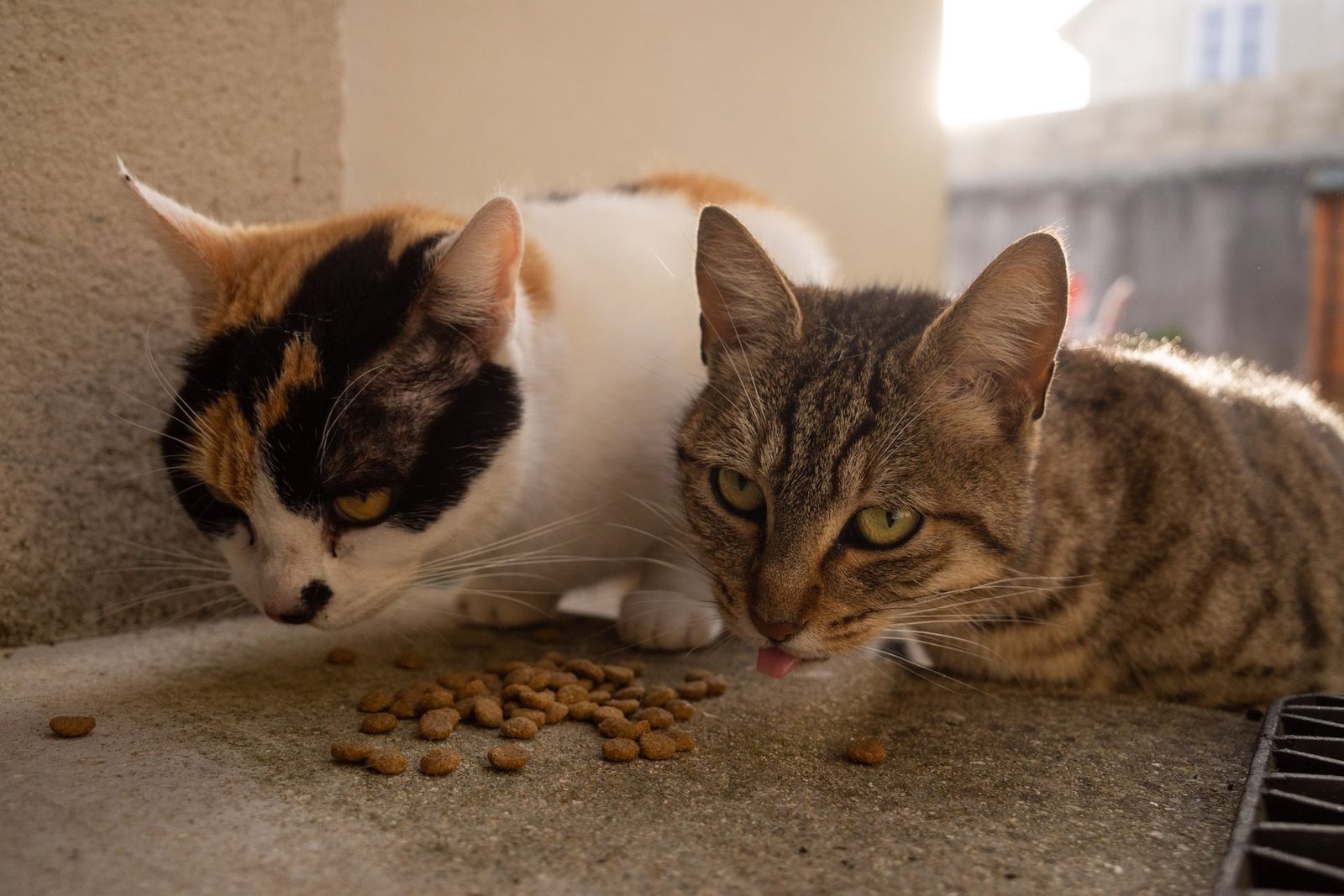
The method: Two or three meals daily at consistent times. Put each pet at their station with their measured food, allow 20–30 minutes, then pick up everything uneaten. What is picked up is discarded or stored for the next meal (wet food should be refrigerated; do not re-serve food left out for hours).
Why it works: Scheduled meals create clear windows of access. There is no food sitting around for the wrong pet to find at 2 p.m. You also gain appetite monitoring for every pet: the cat who suddenly leaves food is noticed at breakfast, not discovered days later. And measured meals make calorie control possible, which matters enormously when one pet is dieting.
Transitioning off free-feeding: Most pets adjust within one to two weeks. Start by offering meals at set times while leaving food down a little less each day, then remove the all-day bowl entirely. Do not free-feed “just a little” during transition; the halfway state preserves the problem. Cats may protest theatrically for a few days. Stay the course, and ensure the measured meals are genuinely adequate, a protesting cat who is also underfed is a welfare issue, not a training phase. If you are unsure about amounts, your veterinarian can confirm targets for each pet.
Microchip Feeders and Other Tech Solutions
When physical separation is impractical, technology fills the gap.
Microchip-Activated Feeders
These feeders read your pet’s implanted microchip (or a collar tag) and open only for the registered animal. They are the standout solution for the hardest common scenario: one pet needs restricted access (diet food, prescription food, or measured meals) while another needs different food in the same space. A dieting cat can have her measured meals protected while the other cat’s feeder stays open, or two cats on different foods can eat side by side without cross-feeding.
They are not cheap, and in a four-pet home the cost multiplies, but for the specific problem they solve, nothing else works as reliably. Introduce them gradually: let the pet get comfortable with the feeder propped open before activating the lid mechanism, and use the collar tag option if a pet is not microchipped.
Other Tools Worth Knowing
- Slow-feeder bowls for the pet who inhales food and then moves on to raid others. Slowing the fast eater keeps everyone at their stations for the full meal window.
- Baby gates with pet doors allow cats through while blocking dogs, creating cat-only feeding zones without closing doors.
- Elevated cat feeding shelves with a jump the dog cannot make serve the same purpose vertically.
- Automatic timed feeders dispense measured meals on schedule, useful when work hours conflict with mealtimes, though they do not prevent cross-feeding on their own.
Special Situations: The Tricky Combinations
The Dieting Pet Plus Normal Housemates
This is the highest-stakes combination. A pet on a weight-loss plan who regularly raids housemates’ food will not lose weight, and the owner will conclude the diet “doesn’t work.” Protect the dieting pet’s plan with the strongest tools you have: separate closed-room feeding, microchip feeders, and picked-up leftovers. Remember that for cats, the danger goes beyond stalled progress: a dieting cat who stops eating her own food because she is filling up elsewhere, or who gets into an inappropriate food, needs veterinary attention. Our full overweight cat diet plan explains why feline weight loss demands such careful management.
Puppy or Kitten Plus Adult or Senior
Growing animals need calorie-dense, nutrient-rich growth formulas; adults and seniors need maintenance levels. The youngster will want the adult’s food and vice versa. Feed separately with doors closed, and be strict about it: growth formulas fed long-term to adults contribute to obesity, and adult food fed to the young can shortchange development. This phase is temporary, the youngster graduates to adult food eventually, but during the overlap, management must be airtight.
Dog Plus Cat Households
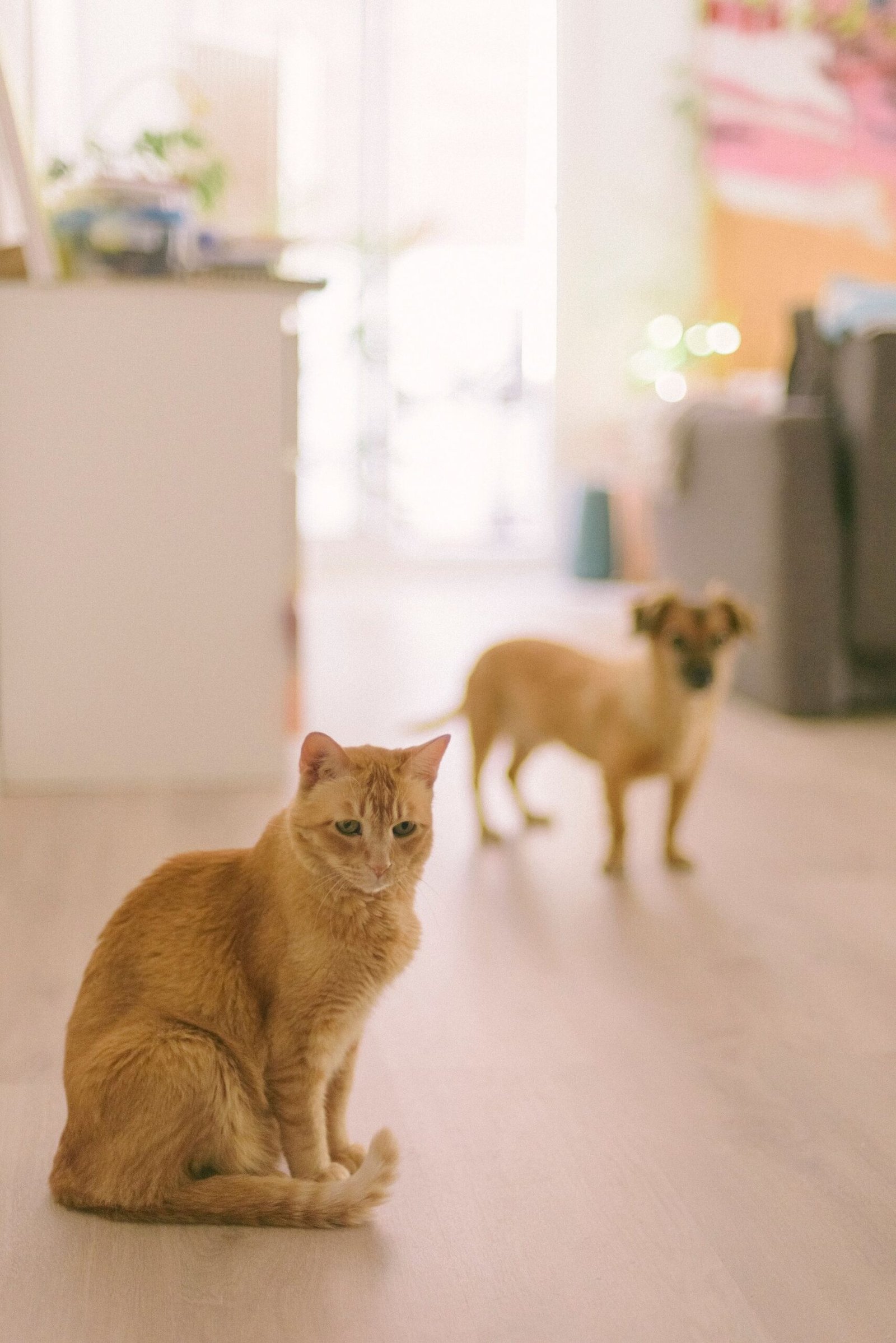
The classic. Dogs love cat food; cat food is too rich for most dogs and can cause digestive upset or weight gain. Cats are less enthusiastic about dog food but will sample it, and dog food is nutritionally incomplete for cats. The height strategy is your best friend: cats eat elevated, dogs eat on the floor. Add scheduled meals and picked-up bowls, and the problem is largely solved. For the feline side of the nutritional equation, our cat nutrition guides explain what cats specifically need from their food.
Prescription Diet Plus Regular Food
When one pet is on a therapeutic diet for kidney disease, urinary issues, allergies, or another condition, cross-feeding can undermine treatment. This combination deserves the strictest management: closed doors, microchip feeders if needed, and a conversation with your veterinarian specifically about multi-pet logistics. Ask your vet which direction of cross-feeding is more dangerous (sometimes it is the healthy pet eating the prescription food, sometimes the reverse) so you can prioritize.
The Allergy Household
When one pet has a diagnosed food allergy, as covered in our guides to cat and dog food allergies, the trigger protein must not reach that pet in any form. This means checking every food in the house, including the other pets’ foods and all treats, for the trigger ingredient. The allergic pet’s diet is the one that gets the microchip feeder and the closed door.
Treats, Toppers, and the Human Factor
Meals are only half the battle. Treats, dental chews, food-dispensing toys, and table scraps are the unregulated shadow economy of the multi-pet home.
Audit every extra. List all treats, chews, and toppers given in your home and check them against each pet’s dietary restrictions. The chicken-based training treat is a problem for the chicken-allergic dog even if his meals are perfect. Keep a dedicated treat jar per pet, labeled, and make it as easy to grab the right one as the wrong one was.
Brief everyone. Family members, pet sitters, dog walkers, and regular guests need the 60-second version: who eats what, where the stations are, and what is off-limits. Write it down and stick it on the fridge. People cannot follow rules they do not know, and “oh, I didn’t realize” is the most common cause of dietary sabotage. A laminated card on the fridge may feel excessive until the first time it prevents a midnight mix-up.
Manage the emotional side. Owners often feel guilty feeding pets differently, especially when one pet watches another eat something “better.” Remember that the prescription or weight-loss diet is medical care, not deprivation. And never “even things out” by giving the restricted pet a taste of the forbidden food; that single taste can trigger an allergic flare or break a diet streak.
Troubleshooting Common Problems
“They eat at different speeds, and the fast one raids the slow one.” Supervise meals and remove the slow eater’s bowl when they walk away, even if food remains. Alternatively, use a slow-feeder bowl for the fast eater to synchronize finishing times. Do not leave the slow pet alone with food “until they finish” while the raider roams free.
“The cat won’t eat in the closed room.” Some cats protest new feeding locations. Make the room appealing: feed there consistently, add a comfortable resting spot, and give it time. If the cat genuinely will not eat when separated, try the height strategy instead, or feed the dog in the closed room and let the cat keep the familiar space.
“The dog guards the cat’s food station.” Resource guarding around food stations needs a behavioral approach: increase distance between stations, feed in fully separate rooms with doors closed, and consult a professional trainer or veterinary behaviorist if guarding escalates. Do not punish guarding; manage the environment and get expert help.
“I work long hours and can’t supervise meals.” Timed automatic feeders handle the schedule; microchip feeders handle the access control. The combination covers most working-owner scenarios. For midday meals, a pet sitter or a lunch-break visit may be needed for pets on strict medical diets.
“One pet keeps losing their collar tag for the microchip feeder.” Use the implanted microchip registration instead of the collar tag, or switch to a harness-style tag holder. If the pet is not microchipped, this is an excellent reason to get it done, and your vet can do it at the next visit.
Frequently Asked Questions
Can I just feed all my pets the same food to keep it simple?
Only if the same food is appropriate for all of them, which is rare across species or life stages. All pets of the same species and similar life stage can often share one quality food, but dogs and cats cannot share, and puppies, kittens, and seniors have different needs from healthy adults. When in doubt, ask your veterinarian whether a single food truly suits everyone in your home.
How do I stop my dog from eating the cat’s food?
Use the height strategy (cat food elevated where the dog cannot reach), feed scheduled meals in separate areas, pick up uneaten food promptly, and supervise. For persistent raiders, feed the cat behind a baby gate with a cat-sized door or in a closed room. Management beats training here; the motivation (delicious high-protein food) will always exceed the training.
Are microchip feeders worth the money?
For households where one pet needs protected or restricted food access, yes, they are the most reliable solution available. They pay for themselves in preserved prescription diets and successful weight-loss plans. For households where simple separation works, they are an unnecessary expense. Match the tool to the problem.
What should I do if the wrong pet eats the other’s food once?
A single incident is rarely an emergency, but the response depends on the diets involved. If a healthy pet samples another healthy pet’s food once, monitor and move on. If a pet on a prescription diet, allergy diet, or weight-loss plan eats the wrong food, or if any pet eats a large quantity, contact your veterinarian for guidance. Then fix the management gap that allowed it.
How long should I supervise meals in a multi-pet home?
As long as different diets are in play. Supervision does not have to mean standing watch; it means being present and attentive during the 20–30 minute meal window, then picking up bowls. Most owners fold this into their routine within a couple of weeks, and the appetite information you gain is valuable in its own right.
Final Thoughts: Systems Beat Willpower
Feeding multiple pets different diets is a systems problem, and systems beat willpower every time. The households that succeed are not the ones with the most disciplined pets or the most vigilant owners; they are the ones with closed doors, consistent schedules, measured meals, and the right tools for their specific combination. Set up separate stations, switch to scheduled supervised meals, pick up what is uneaten, protect the most vulnerable diet with the strongest measures, and get every human in the home following the same playbook.
It takes a couple of weeks to settle into the rhythm, and there will be a learning curve, usually involving one pet outsmarting your first arrangement. Adjust, improve, and keep going. The reward is worth it: every pet getting exactly the nutrition they need, no more, no less, and a mealtime routine that runs itself. And when the system works, you will wonder why it ever felt complicated, which is the true sign of a good system. For help structuring the feeding side of the routine, our feeding guides cover schedules, portions, and transitions in detail.